
A sample goes on the pan, the draft shield closes, and the last digit won’t stop moving. Weigh it again and you get a different number. Before you book a service visit, take a look at the room. A balance that reads to 0.1 mg can detect disturbances you might never notice. These disturbances can be cause by something as as simple as a nearby door opening, a pump running, or a static charge on a plastic weigh boat. The cause could even be the environment or sample rather than a fault with the balance. This guide discusses eight factors that could be causing analytical balance instability in your lab. Checking the possible issues below can help you narrow down the cause before arranging service.
Air Currents and Drafts
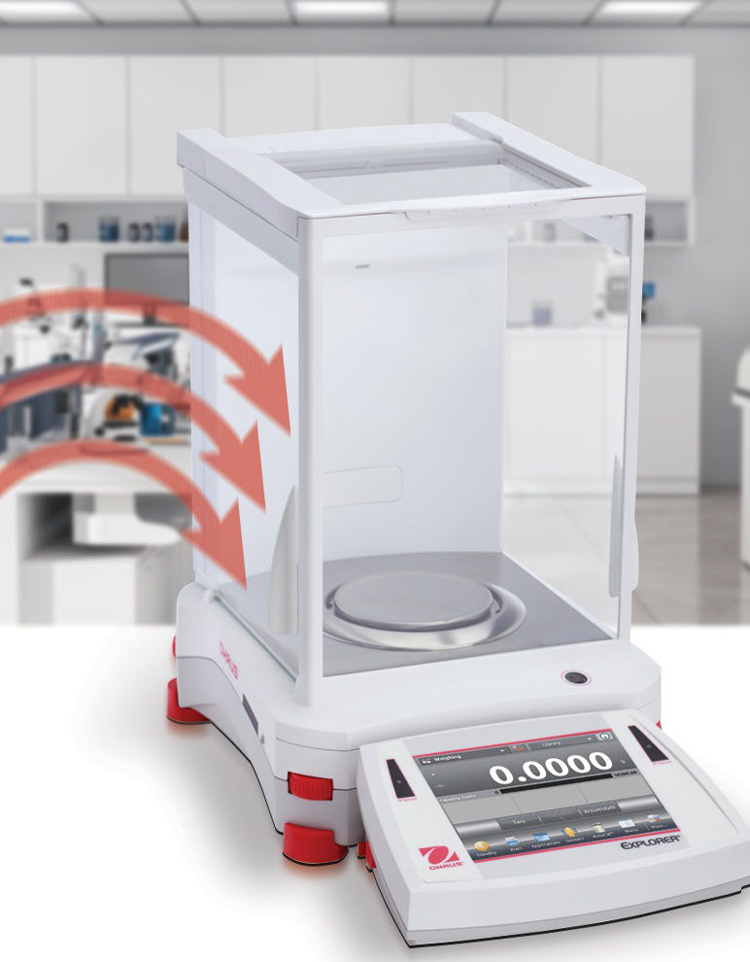
Close the draft shield, take your hands off the bench, and step back. Give the reading a few seconds. If it settles down, your analytical balance instability could probably be caused by air movement.
The usual suspects are an HVAC supply vent overhead, a nearby doorway, or a walkway people use all day. You don’t need to feel a breeze for it to throw off a reading at this level.
- Position the balance away from supply vents, doors, open windows, and busy walkways.
- Open the draft shield slowly and only as far as necessary. Close it before taking a reading.
One safety note: a draft shield protects the reading, not you. If you’re weighing hazardous powders, you need proper containment as well.
Temperature and Humidity
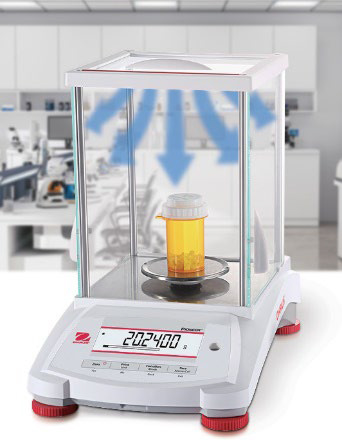
Does the balance behave in the morning and act up after lunch? Check the room before you assume the instrument needs repair. Our partners at OHAUS recommend using a balance in a room with temperatures set to +20°C to +25°C and 40% to 55% relative humidity. Follow your balance manufacturer’s specifications, including limits on how quickly temperature can change.
Temperature swings cause drift. Humidity works on the sample and container instead: hygroscopic materials pick up moisture and dry air makes static worse.
Here are a few tips to help:
- Keep the balance away from windows and vents that expose it to temperature changes.
- Use a temperature and humidity data logger to compare room conditions with the times readings become unstable.
- If you find a pattern, share the log with your facilities team. “It gets 3°C warmer every afternoon” is much easier for them to act on than “the balance is acting up.”
Vibration
A level bench isn’t necessarily a stable one. Centrifuges, vacuum pumps, and compressors can send vibration through the work surface or the floor. So can leaning on the bench, or setting a bottle down next to the balance in the middle of a reading.
See whether the instability lines up with nearby equipment running. If it does, move the balance to a rigid surface away from that equipment. When moving it isn’t an option, an anti-vibration weighing table can help, as long as it’s designed for the kind of vibration you have.
Many balances also have a stability or environmental filter in the settings. A stronger filter steadies the display by slowing its response. It hides the vibration rather than removing it, so recheck performance after you change it.
Static Electricity
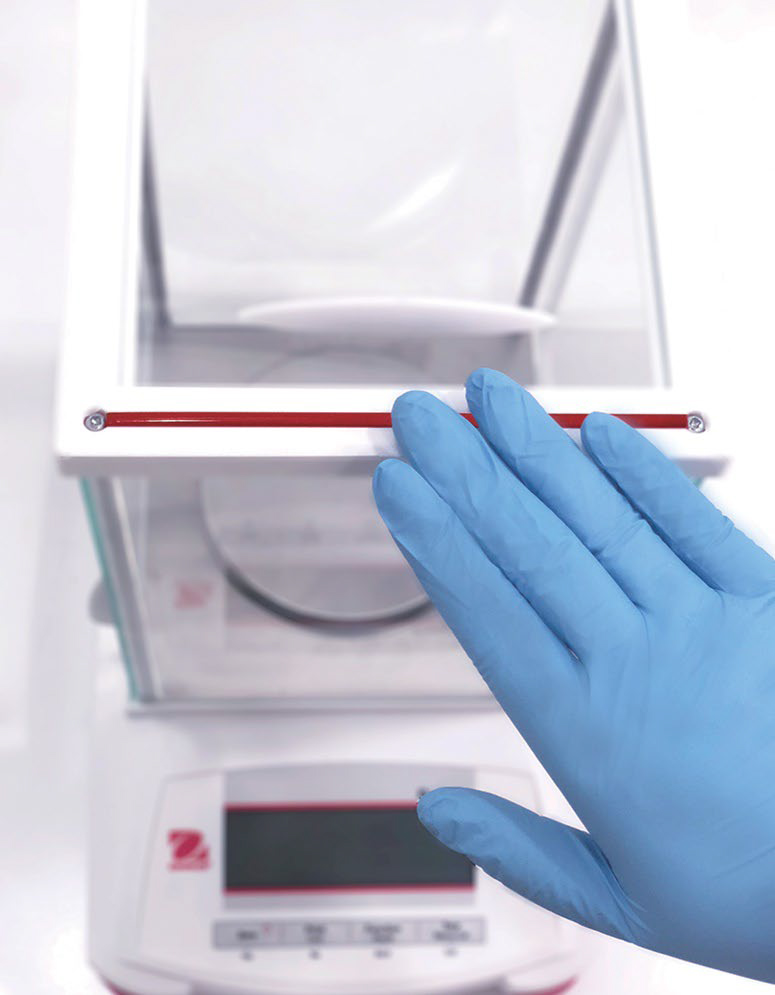
Plastic weigh boats can cause problems in a dry lab. The reading may drift, settle slowly, or jump when you nudge the container. Static problems can become more noticeable during winter heating.
Weigh a test weight, then the empty plastic container. If the weight settles and the container doesn’t, static may be the cause.
Your method will determine which static-control measures are suitable:
- Switch to a glass or metal container.
- Try anti-static weigh boats.
- Neutralize the container and sample with an ionizer intended for weighing applications.
- Use stainless-steel tweezers. OHAUS recommends them over rubber-tipped tweezers for cutting down on static.
- Check humidity and follow the manufacturer’s grounding instructions.
Changes in the Sample
Sometimes the balance is doing exactly what it should, and it’s the sample that’s changing. A volatile liquid loses mass as it evaporates. A hygroscopic powder gains mass as it pulls moisture from the air.
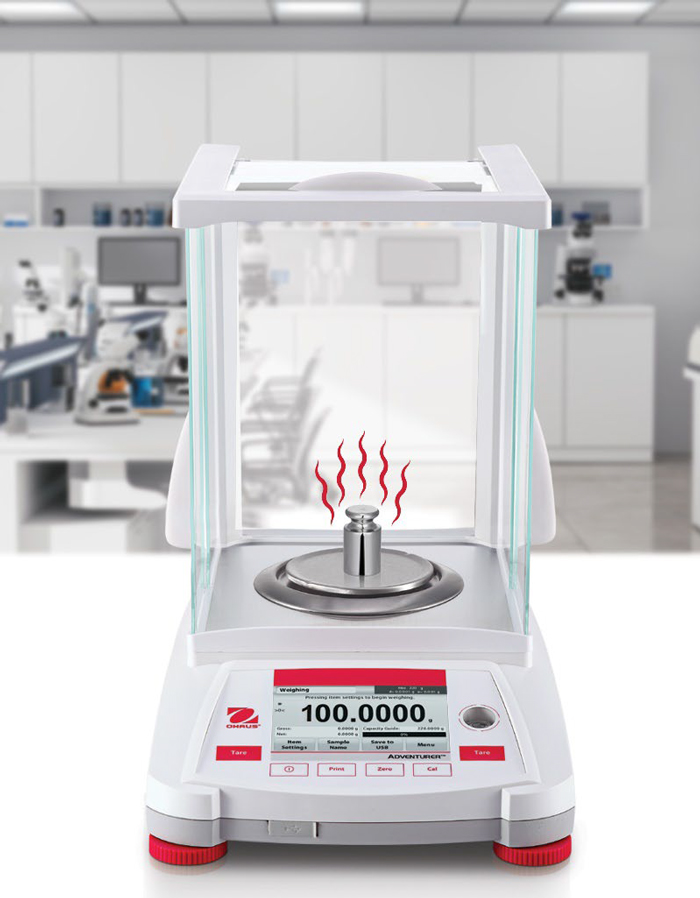
Temperature matters too. A warm container creates convection currents in the weighing chamber and can produce an apparent low reading. A cold container can also disturb the measurement and collect condensation. Take extra care with anything coming straight from an oven or refrigerator.
- Allow samples to reach room temperature in a desiccator when your procedure permits.
- Use closed containers for volatile or moisture-sensitive samples.
- Handle containers with tongs or tweezers so your hands don’t warm them.
- Keep your timing consistent from one weighing to the next.
NIST’s GMP 10 guide to weighing operations explains why thermal equilibrium matters. For reactive or temperature-sensitive materials, stick to your validated method, including any required handling times.
Heat Radiation
Your thermostat can read a perfect 21°C while sunlight warms one side of the balance. A nearby oven, a heat-producing light, or an incubator can do the same thing, and that uneven heating creates air currents inside the weighing chamber.
Look at what’s around the instrument, including equipment that only runs now and then. Keep the balance out of direct sun and away from heat sources. And watch your own position: if the display changes when you lean in, your body heat, your breath, or a hand on the bench may be the cause.
Magnetic Fields
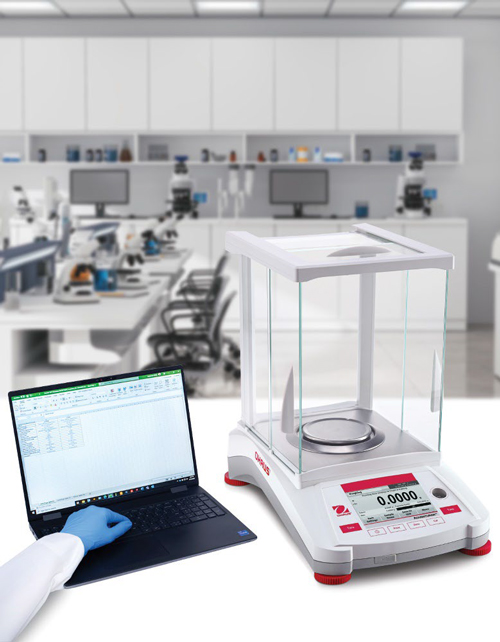
Many analytical balances use electromagnetic force compensation, which means magnetic samples and nearby magnetic fields can interfere with them. If the problem only shows up during certain tasks, check for magnetic stirrers, motors, and transformers close by.
For magnetic samples, talk to the balance manufacturer about the right setup. Options include:
- Moving magnetic equipment farther from the balance.
- Increasing the distance between the sample and weighing mechanism using a manufacturer-approved arrangement.
- Using below-balance weighing if the instrument supports it.
- Switching to a strain-gauge load cell system, which OHAUS lists as an option for magnetic samples, as long as it meets your readability requirements.
Air Buoyancy
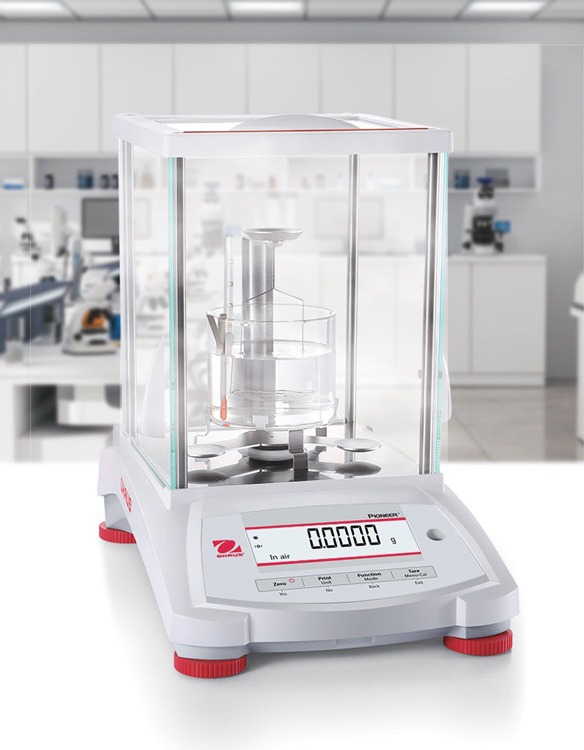
Air buoyancy belongs in a weighing review, even when the display is steady. It affects measurement uncertainty rather than causing the flickering described in earlier sections. Air exerts an upward force on objects, with the effect depending on their volume and the air’s density. That density changes with temperature, humidity, and barometric pressure.
For routine work, check whether buoyancy is even significant at your method’s uncertainty requirements. Often it isn’t. High-accuracy weighing and mass calibration are different: they may need a correction based on the densities of the sample and the reference weights.
Quick Troubleshooting Guide for Analytical Balance Instability
Look at what the display is doing to help point you to your first check of what is causing analytical balance instability. Keep in mind that different causes can look alike.
| What you see | Possible cause | First check |
| Last digit keeps flickering | Air movement or vibration | Close the shield. Check nearby equipment and bench contact. |
| Reading rises or falls slowly | Sample changes, temperature, or static | Compare a test weight with the container and sample. |
| Plastic containers behave erratically | Static electricity | Try a glass or metal container instead. |
| Only certain samples cause trouble | Magnetism or sample behavior | Check the material and nearby magnetic equipment. |
| Results change during the day | Environmental changes | Compare readings with temperature and humidity logs. |
| Reading changes when you lean closer | Body heat, airflow, or bench contact | Step back without touching the work surface. |
| Results changed after relocation | Level, acclimatization, or adjustment | Follow the manufacturer’s relocation and verification procedure. |
Change one thing at a time and recheck. If a test weight reads steadily, the sample, container, or handling method is a likely cause. If test weights still won’t settle after you’ve checked the setup, contact your service provider.
Calibration and Daily Use
Internal Calibration and Unstable Readings
Internal adjustment can’t fix drafts, vibration, or static, so sort those out before you run the routine. Then follow the manufacturer’s instructions and verify performance afterward.
Calibration Frequency
Your lab’s quality procedures should set the calibration interval. Consider usage, required accuracy, manufacturer guidance, and any regulatory requirements. Calibration checks the balance’s performance against a reference; adjustment changes how it responds. Routine test-weight checks help you monitor performance between calibrations.
Readability and Accuracy
Readability is simply the smallest increment the display shows. A balance that reads to 0.1 mg isn’t necessarily accurate to 0.1 mg. Your smallest usable sample depends on repeatability and the uncertainty your method allows, so establish a minimum weight if your procedure calls for one.
Moving a Balance
Relevel it, give it the specified acclimatization and warm-up time, and follow the manufacturer’s adjustment instructions. Check it with test weights before putting it back into service.
Choosing a Balance for Your Lab
LabRepCo offers analytical balances, precision balances, and weighing accessories from manufacturers including OHAUS and Sartorius. Our guide to the different types of laboratory balances and scales explains the main instrument categories.
Shopping for a new balance? Tell us what you weigh, your smallest sample, and your required tolerance. Contact the LabRepCo team or call 800-521-0754 to discuss your application.
Frequently Asked Questions About Analytical Balance Instability
Air currents, temperature changes, static electricity, vibration, and sample-related effects are common causes of analytical balance drift.
Start by closing the draft shield and checking the balance’s location. If the problem only occurs with certain samples or containers, investigate temperature differences, moisture absorption, evaporation, and static electricity.
OHAUS recommends a laboratory temperature of 20°C to 25°C and relative humidity of 40% to 55% in its analytical balance stability guide.
However, the correct operating range depends on the balance and the measurement requirements. Maintaining consistent conditions is especially important for high-precision weighing.
Start by checking the humidity in the room and the material of your weighing container.
Plastic containers and dry conditions can contribute to static buildup. Switching to suitable glass or metal containers, using an ionizer, and reducing unnecessary handling can help.
Yes, but magnetic materials can interfere with certain weighing systems.
Some balances support below-balance weighing, allowing the sample to be positioned away from the weighing mechanism. Check the instrument’s instructions and consult the manufacturer for the appropriate procedure.
Choose a stable, level work surface away from doors, windows, HVAC vents, direct sunlight, and vibrating equipment.
For demanding applications, a dedicated weighing table and a controlled laboratory environment can improve measurement consistency.
The appropriate calibration interval depends on instrument use, required accuracy, applicable regulations, manufacturer guidance, and your laboratory’s quality procedures.
Calibration verifies instrument performance. Adjustment, which may use an internal or external weight, changes the instrument’s response. Both should be handled according to the manufacturer’s instructions and your laboratory’s procedures.
References and Additional Resources
The following technical resources support the weighing principles and troubleshooting recommendations discussed in this article for analytical balance instability.
- OHAUS — Eight Causes of Instability in Analytical Balances. Manufacturer guidance covering environmental influences, magnetic interference, static electricity, vibration, sample behavior, and air buoyancy. Read the OHAUS technical guide.
- National Institute of Standards and Technology (NIST) — GMP 10: Understanding Factors Affecting Weighing Operations. Guidance on environmental control, thermal equilibrium, electrostatic effects, and good weighing practices. Read the NIST publication.
- METTLER TOLEDO — Analytical Balances. Technical information on electromagnetic force compensation, static-related errors, draft shields, and proper weighing practices. Read the manufacturer’s guidance.
Always consult your balance manufacturer’s operating instructions and your laboratory’s established procedures when troubleshooting, calibrating, or adjusting an instrument.