800-521-0754

Request Information

Request Info

CLOSE

Microplate Readers and Washers

A microplate reader, also called a plate reader, is a laboratory instrument that detects and quantifies optical signals from samples arrayed in multi-well microplates. Microplate readers are the central analytical instrument in ELISA workflows, drug discovery and compound screening, DNA and protein quantification, cell viability and cytotoxicity assays, gene expression analysis, enzyme kinetics, and receptor binding studies. Combined with a microplate washer to automate reagent removal between assay steps, these instruments form the backbone of high-throughput life science research and pharmaceutical screening operations.

LabRepCo carries microplate readers and washers from Molecular Devices, Accuris (Benchmark Scientific), and Tecan. offering one of the most comprehensive selections of microplate instrumentation available from a single East Coast distributor. From entry-level absorbance readers for routine ELISAs to advanced multi-mode SpectraMax systems for complex drug discovery assays, LabRepCo can match the right instrument to your application and throughput requirements.

Choosing a Microplate Reader – Absorbance vs Multi-Mode

The most important decision when selecting a microplate reader is whether you need an absorbance-only reader or a multi-mode reader. This choice should be driven by your current assays and your anticipated future assay requirements.

Absorbance Reader Multi-Mode Reader
Detection Modes UV/Vis absorbance only Absorbance plus fluorescence intensity, luminescence, time-resolved fluorescence, fluorescence polarization, and more depending on model
Best For Standard ELISA, DNA/RNA/protein quantification, OD-based cell growth assays Diverse assay portfolios; fluorescence-based cell assays; FRET; reporter gene assays; drug discovery screening
Plate Formats 96-well (most models) 96-well, 384-well, and 1536-well on advanced models
LabRepCo Models Accuris SmartReader 96 series Molecular Devices SpectraMax, FilterMax, FlexStation series
Cost Lower – appropriate for labs with defined, stable assay portfolios Higher – justified when assay diversity or throughput requirements demand it
Software Basic plate reading software SoftMax Pro – industry-standard data acquisition and analysis software included

Microplate Reader Brands at LabRepCo

Molecular Devices – SpectraMax Multi-Mode Readers

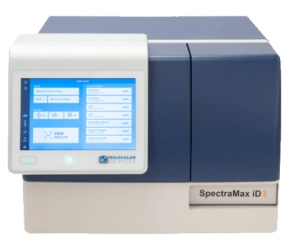
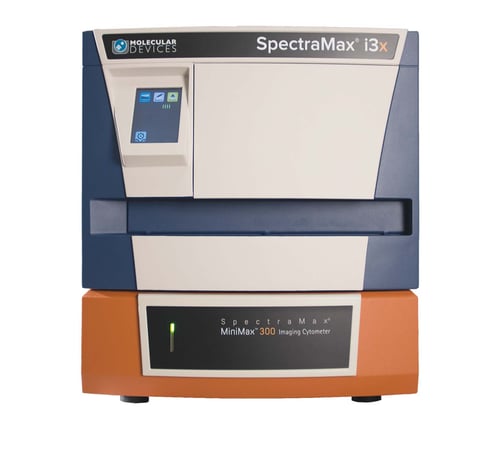
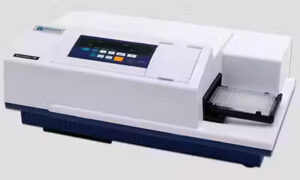
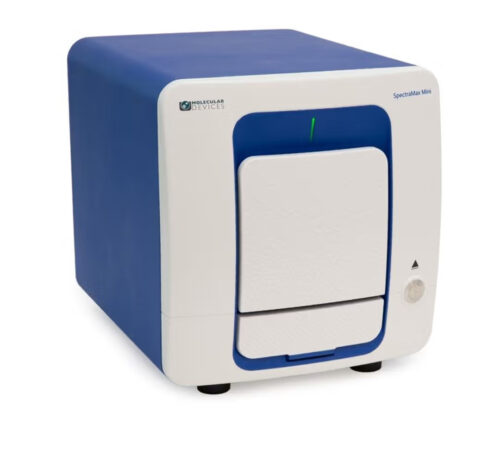
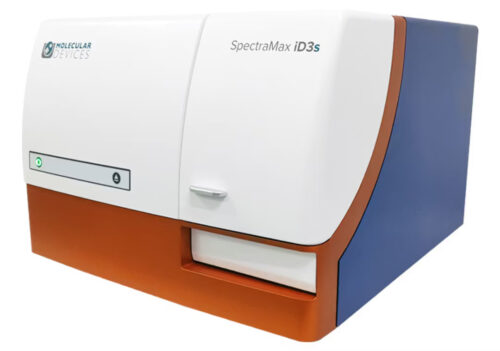
Molecular Devices is one of the most recognized names in microplate reading, and the SpectraMax series represents their flagship line of multi-mode readers for biotech, pharmaceutical, and research applications. LabRepCo carries the full SpectraMax portfolio including:

  • SpectraMax series – configurable multi-mode readers covering absorbance, fluorescence intensity, time-resolved fluorescence, fluorescence polarization, and luminescence in a single instrument
  • FilterMax series – high-sensitivity multi-mode readers optimized for filter-based fluorescence and luminescence detection
  • FlexStation 3 – multi-mode reader with integrated 8 or 16-channel pipettor for automated reagent addition directly from the instrument, eliminating manual pipetting steps

All Molecular Devices readers are supplied with SoftMax Pro Microplate Data Acquisition and Analysis Software, an industry-leading platform for protocol development, data analysis, and compliance reporting including FDA 21 CFR Part 11 compliant audit trail features for regulated pharmaceutical environments. The StakMax Microplate Handling Stacker can be integrated with SpectraMax readers through SoftMax Pro for fully automated plate processing.

Accuris (Benchmark Scientific) – SmartReader 96 Absorbance Readers

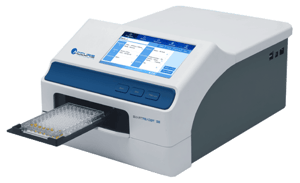
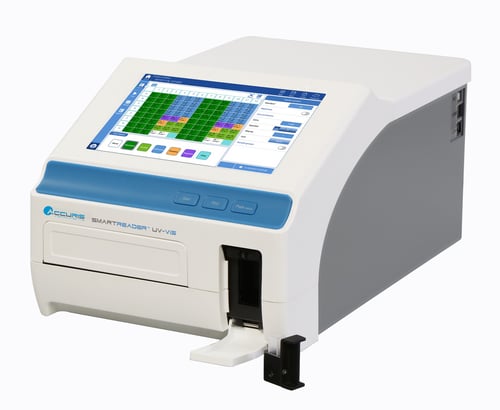
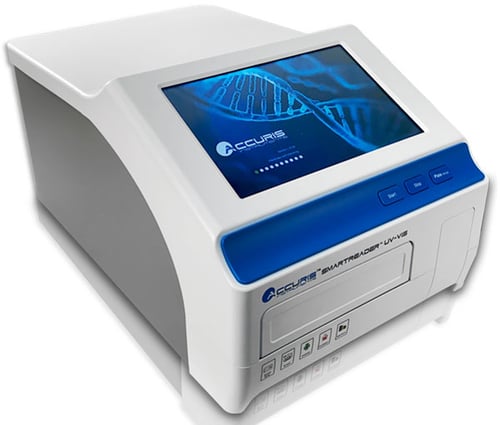
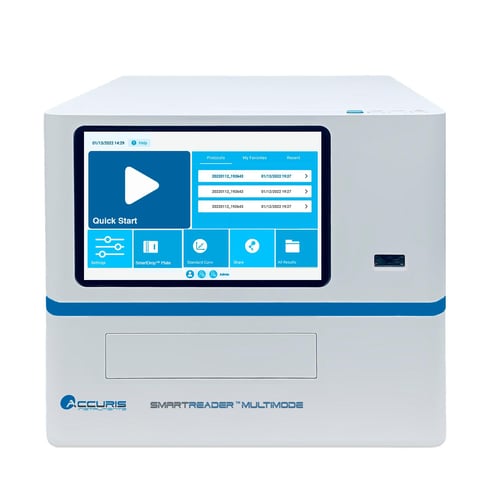
The Accuris SmartReader 96 series from Benchmark Scientific provides reliable UV/Vis absorbance reading for standard laboratory applications at a competitive price point. Available in standard and temperature-controlled incubation configurations, and with or without a cuvette port for single-sample measurement alongside microplate reading. The SmartReader 96 is the right choice for labs performing routine ELISAs, DNA/RNA quantification, and OD-based assays where multi-mode detection is not required.

Microplate Washers at LabRepCo

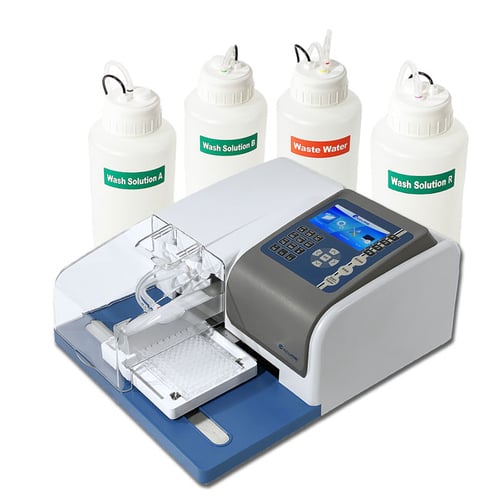
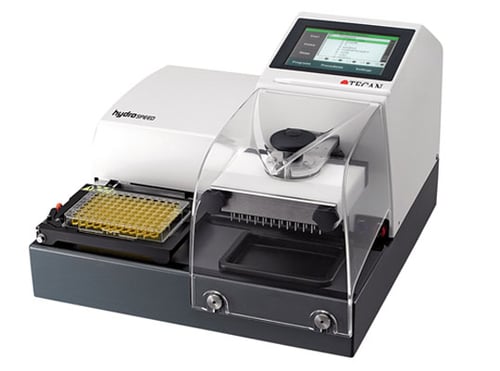
Microplate washers automate the repetitive plate washing steps in ELISA and other bead- or cell-based assays, reducing hands-on time, improving wash consistency, and decreasing inter-assay variability compared to manual washing. LabRepCo carries microplate washers from three manufacturers:

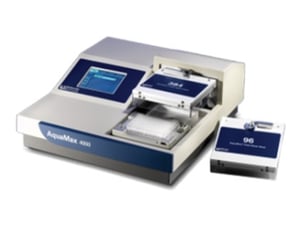
  • Molecular Devices AquaMax 2000 and 4000 – versatile 4-in-1 microplate washers with user-interchangeable heads for both 96-well and 384-well biochemical and cell-based washing applications. The AquaMax 4000 adds four fluid inlets and expanded programming for more complex washing protocols
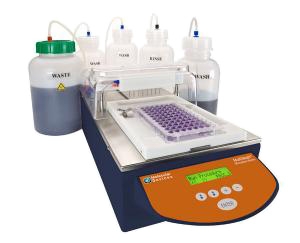
  • Molecular Devices MultiWash – low-cost, self-contained 96-well microplate washer for routine ELISA washing with no external pumps required. Supports flat, round, and V-bottom plates across 20 built-in wash protocols
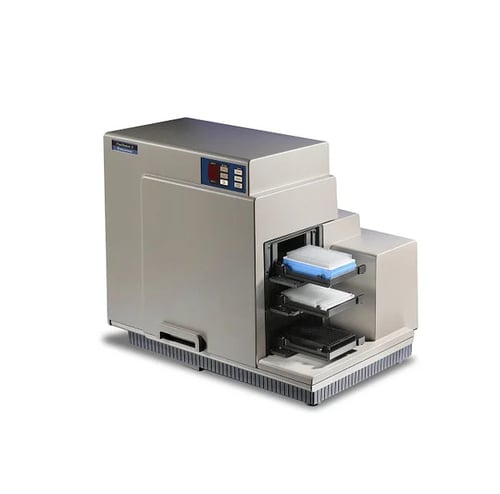
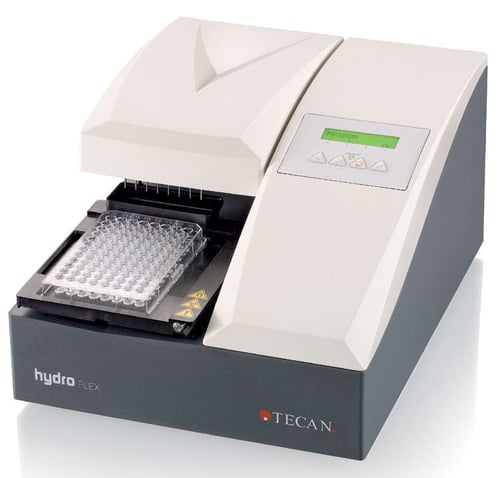
  • Tecan HydroFlex Plus – flexible and upgradeable platform supporting 96-well strip washing, magnetic bead washing, and vacuum filtration. Reflects over 30 years of Tecan liquid handling expertise
  • Accuris SmartWasher 96 – compact, automated 96-well plate washer designed as a companion instrument to the SmartReader 96, simplifying ELISA workflows for lower-throughput applications

Microplate Reader Applications

  • ELISA (enzyme-linked immunosorbent assay) – the most common microplate reader application; absorbance reading at 405, 450, or 490 nm depending on substrate
  • Drug discovery and compound screening – high-throughput screening (HTS) of compound libraries against biochemical or cell-based targets
  • DNA, RNA, and protein quantification – absorbance at 260/280 nm for nucleic acids; colorimetric assays (BCA, Bradford, Lowry) for protein
  • Cell viability and cytotoxicity – MTT, MTS, CTG, and similar assays in 96-well or 384-well format
  • Enzyme kinetics – time-course reading to measure enzymatic activity
  • Gene expression – reporter gene assays using luciferase (luminescence) or GFP (fluorescence)
  • Receptor binding and kinase assays – fluorescence polarization detection for competitive binding studies
  • Environmental and food safety testing – ELISA-based detection of contaminants, allergens, and pathogens in 96-well format

Frequently Asked Questions About Microplate Readers and Washers

What detection modes do microplate readers use?

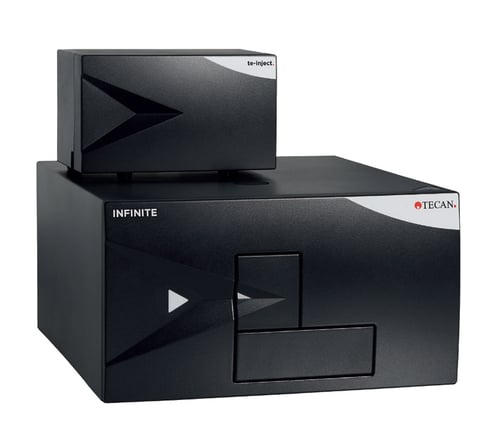
Microplate readers use several detection modes: UV/Vis absorbance (most common – for ELISAs and nucleic acid/protein quantification), fluorescence intensity (for fluorescent dye-based cell and molecular assays), time-resolved fluorescence or TRF (for FRET-based assays with reduced background), luminescence (for reporter gene assays and cell viability), and fluorescence polarization (for binding and kinase assays). Multi-mode readers like the Molecular Devices SpectraMax series combine several or all of these in one instrument.

What is the Molecular Devices SpectraMax and what makes it different?

The Molecular Devices SpectraMax series are multi-mode microplate readers widely used in drug discovery, basic research, and pharmaceutical quality control. They are distinguished by broad detection mode coverage, the SoftMax Pro data acquisition and analysis software included with every system, scalability from basic absorbance to full multi-mode and imaging configurations, and compatibility with the StakMax automated plate stacker for high-throughput workflows. LabRepCo is an authorized Molecular Devices distributor carrying the full SpectraMax line.

What is the difference between an absorbance reader and a multi-mode reader?

An absorbance reader (like the Accuris SmartReader 96) measures only UV/Vis absorbance – appropriate for standard ELISAs, protein quantification, and DNA/RNA measurement at lower cost. A multi-mode reader (like the Molecular Devices SpectraMax series) adds fluorescence, luminescence, and other detection technologies for complex assay types. Absorbance readers are simpler and more cost-effective for labs with defined absorbance-only workflows. Multi-mode readers are preferred when assay diversity or future growth in assay types is anticipated.

Can microplate readers be used for 384-well plates?

Yes. Molecular Devices SpectraMax multi-mode readers support 96-well and 384-well microplate formats, with select models supporting 1536-well plates for ultra-high-throughput screening. The Accuris SmartReader 96 is designed for 96-well plates only. For drug discovery and high-throughput screening applications requiring 384-well or higher density formats, the Molecular Devices SpectraMax series is the appropriate choice.

What is a microplate washer used for?

A microplate washer automates the removal of unbound reagents from microplate wells between incubation steps in assays like ELISA, bead-based immunoassays, and cell-based assays. Automated washing improves assay reproducibility, reduces hands-on time, minimizes the risk of carryover contamination between wells, and enables higher throughput than manual washing. Microplate washers are available for 96-well and 384-well formats and for both biochemical and cell-based washing applications.

For automation of reagent addition alongside reading, browse our microplate pipetting stations including the Molecular Devices FlexStation 3 with integrated pipetting capability. View our complete microplate instrumentation selection or contact LabRepCo at 800-521-0754 for application guidance.