
“Can we use the refrigerator we already have?” It is a practical question for medical practices, pharmacies, and school health offices preparing to store vaccines. But does your facility truly know the differences between medical-grade vs. household refrigerators and the CDC recommendations?
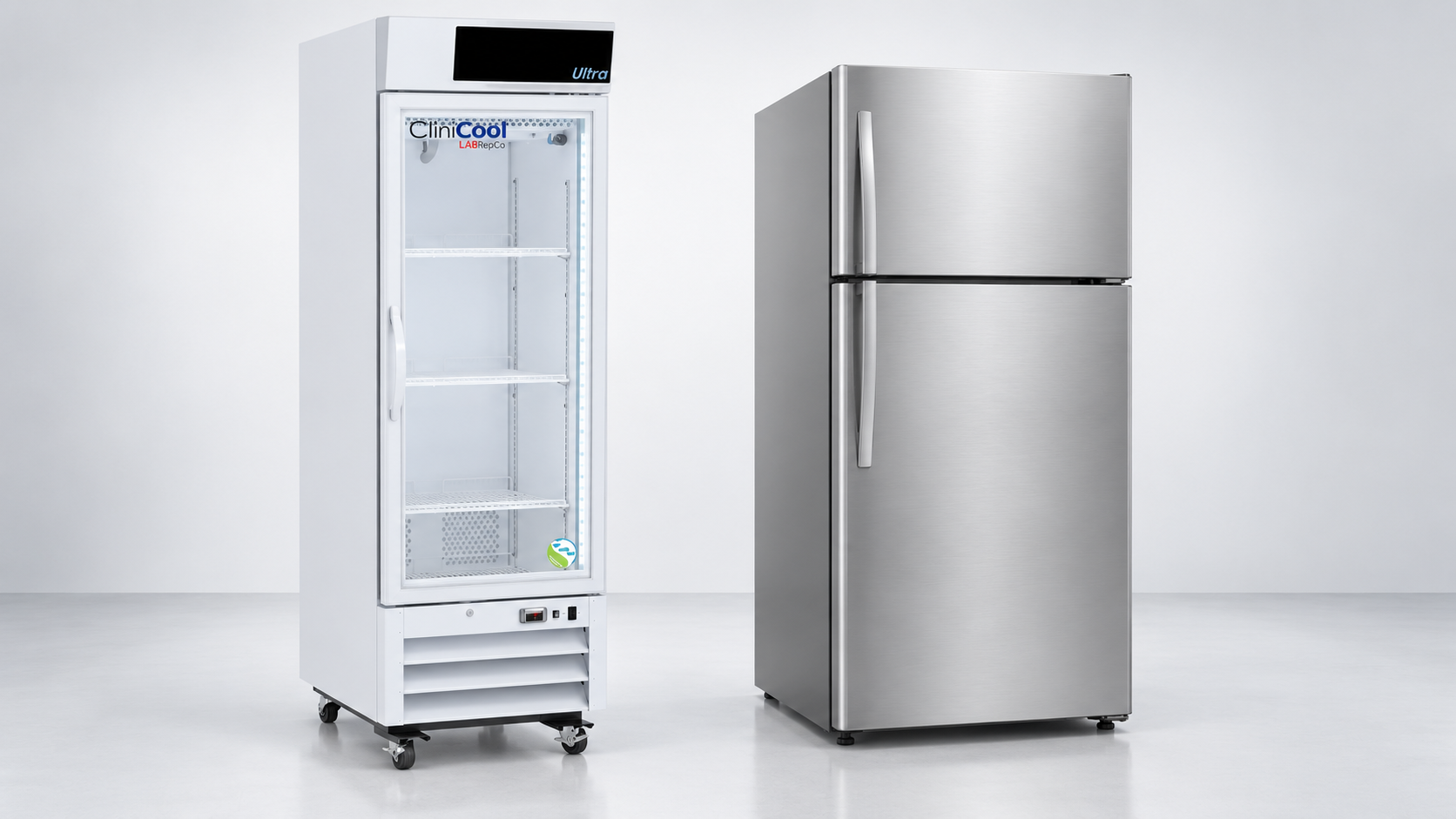
The CDC allows household-grade refrigerators for refrigerated vaccines only as a last-choice option. Its first preference though, is equipment that conforms to NSF/ANSI Standard 456, followed by purpose-built and pharmaceutical-grade units. “Medical-grade” is a common industry term, while the CDC uses these more specific equipment categories in its guidance.
Start With the CDC’s Ranking
The July 2026 Vaccine Storage and Handling Toolkit lists four suitable equipment types in order of preference:
- Units that conform to NSF/ANSI Standard 456
- Purpose-built vaccine storage units
- Pharmaceutical-grade units
- Household-grade units used only for refrigerated vaccines
The strongest warning concerns dormitory-style and bar-style combination units. These small appliances usually have one exterior door and an internal freezer compartment or cooling plate. The CDC says they should never be used for vaccine storage, even temporarily, because they create a serious risk of freezing refrigerated vaccines.
A full-size household combination unit is treated differently. Its refrigerator Medical-Grade vs. Household Refrigerators for Vaccine Storage: What the CDC Recommends
“Can we use the refrigerator we already have?” It is a practical question for medical practices, pharmacies, and school health offices preparing to store vaccines.
The CDC allows household-grade refrigerators for refrigerated vaccines as a last-choice option. Its first preference is equipment that conforms to NSF/ANSI Standard 456, followed by purpose-built and pharmaceutical-grade medical refrigerators. “Medical-grade” is a common industry term, while the CDC uses these more specific equipment categories in its guidance.
Start With the CDC’s Ranking
The July 2026 Vaccine Storage and Handling Toolkit lists four suitable equipment types in order of preference:
- Units that conform to NSF/ANSI Standard 456
- Purpose-built vaccine storage units
- Pharmaceutical-grade units
- Household-grade units used only for refrigerated vaccines
The strongest warning concerns dormitory-style and bar-style combination units. These small appliances usually have one exterior door and an internal freezer compartment or cooling plate. The CDC says they should never be used for vaccine storage, even temporarily, because they create a serious risk of freezing refrigerated vaccines.
A full-size household combination unit is treated differently. Its refrigerator compartment may serve as a last option for refrigerated vaccines, provided it can maintain the required temperature range. Its freezer compartment should never hold vaccines. Any facility stocking frozen vaccines will need a separate medical freezer that meets the applicable temperature requirements.
Placement inside a household refrigerator also matters. Cold air entering from the freezer can produce freeze-prone areas beneath vents. Door shelves, produce drawers, and other areas with limited airflow are poor storage locations. The CDC recommends keeping refrigerated vaccines between 2°C and 8°C, with the thermostat set at the factory setting or midpoint temperature, such as 5°C.
Temperature damage is not always visible. A vaccine exposed to improper conditions may look perfectly normal, and refrigerated vaccines exposed to 0°C or colder can lose potency when stored improperly.
Where Medical Refrigerators Earn Their Keep
Every door opening introduces warm air. Cabinet loading, airflow, room temperature, and staff routines also affect storage conditions. The CDC notes that purpose-built units are designed and tested specifically to maintain appropriate vaccine temperatures.
Many models use microprocessor controls, digital sensors, fan-forced circulation, or multiple air vents. These features improve temperature uniformity and help the cabinet return to its setpoint after the door closes. Dedicated refrigerator designs also remove the internal freezer compartment responsible for many freeze-prone areas in dormitory-style units.
High- and low-temperature alarms are common. Depending on the model, the refrigerator may also monitor open doors and power interruptions or provide remote alarm contacts. For a facility holding a high-value vaccine inventory, those notification features can be as important as cabinet capacity.
Do Not Overlook the Data Logger
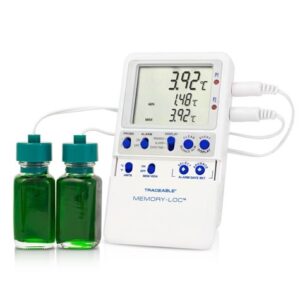
The storage cabinet is only half of the temperature-control system. Every vaccine refrigerator needs an appropriate temperature monitoring device, and the CDC recommends digital data loggers for routine storage. LabRepCo carries temperature-monitoring data loggers and thermometers for vaccine storage applications.
A digital data logger records temperatures at programmed intervals and documents the duration of an excursion. A buffered probe more closely reflects vaccine temperature than a basic thermometer measuring only the surrounding air.
The logger can be integrated into the refrigerator or installed as a separate device. Keep a backup available in case the primary unit malfunctions or is away for calibration.
What NSF/ANSI 456 Tells a Buyer
NSF/ANSI 456 is a performance standard created specifically for vaccine storage equipment. The CDC places conforming units first in its ranking because they have been rigorously tested for this application.
For buyers, the designation supplies a recognized performance benchmark and documentation that can support an equipment review or inspection. It also makes comparisons more meaningful when several refrigerators appear similar on a basic specification sheet.
Local requirements still apply. Vaccines for Children providers and facilities storing publicly purchased vaccines should consult their state or local immunization program before ordering equipment. Each vaccine must also be stored according to its manufacturer’s current instructions.
Match the Refrigerator to the Work
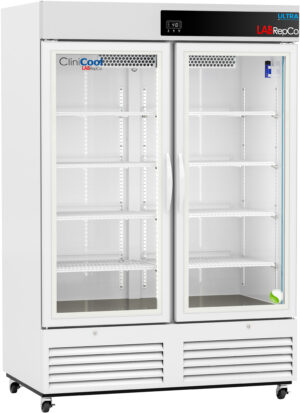
Start with the amount and type of inventory the facility handles. A small office may need a benchtop or undercounter refrigerator, while a busy pharmacy or health system may require one or more full-height cabinets. Leave enough room for air to circulate around the vaccines and allow for seasonal inventory increases.
Other practical questions include:
- Will the facility store refrigerated vaccines, frozen vaccines, or both?
- Does the refrigerator need to fit beneath a counter or into a built-in space?
- Would a solid door or glass door work better for staff?
- Who needs access, and is a key or keypad preferred?
- Where should alarm notifications go after hours?
- Does the state or local program require NSF/ANSI 456 equipment?
- How will temperature records be reviewed and retained?
These questions narrow the field quickly and prevent paying for features the facility will never use.
Medical Refrigerator Options From LabRepCo
LabRepCo offers NSF/ANSI 456 certified models in its CliniCool Silver Series and the Follett Infinity line. CliniCool options include benchtop, undercounter, compact, and full-size upright refrigerators with solid or glass doors. Available features vary by model and include hydrocarbon refrigerants, ENERGY STAR certification, keyed locks, alarms, and digital temperature displays.
Follett Infinity refrigerators combine stainless steel construction with compact footprints, and select models offer keypad access. PHCbi biomedical refrigerators provide additional options for clinical laboratories and research facilities that need reliable temperature uniformity and monitoring.
The right unit comes down to inventory volume, available space, access needs, and local program requirements. Browse LabRepCo’s medical and vaccine refrigerators, or call our cold storage specialists at 800-521-0754 for help comparing models.