
In vivarium planning and IACUC protocol development, one of the most consequential equipment decisions is choosing between an animal transfer station (ATS) and an animal biosafety cabinet (BSC). Both are HEPA-filtered ventilated enclosures used for animal handling. Both protect the animal from environmental contamination. But their purpose, design, and regulatory classification are fundamentally different – and using the wrong one for a given procedure is a biosafety failure, not just an equipment preference.
This guide explains what each type of equipment does, what it protects against, when each is required, and how to determine which is appropriate for your specific animal protocols.
What Is an Animal Transfer Station?
An animal transfer station (ATS) is a ventilated enclosure designed for the routine transfer of laboratory animals between cages. The primary functions of an ATS are protecting animals from airborne environmental contamination during the transfer process, and protecting animal care staff from exposure to animal allergens – a significant occupational health concern in animal research facilities where mouse and rat allergen sensitization affects a meaningful percentage of exposed workers.
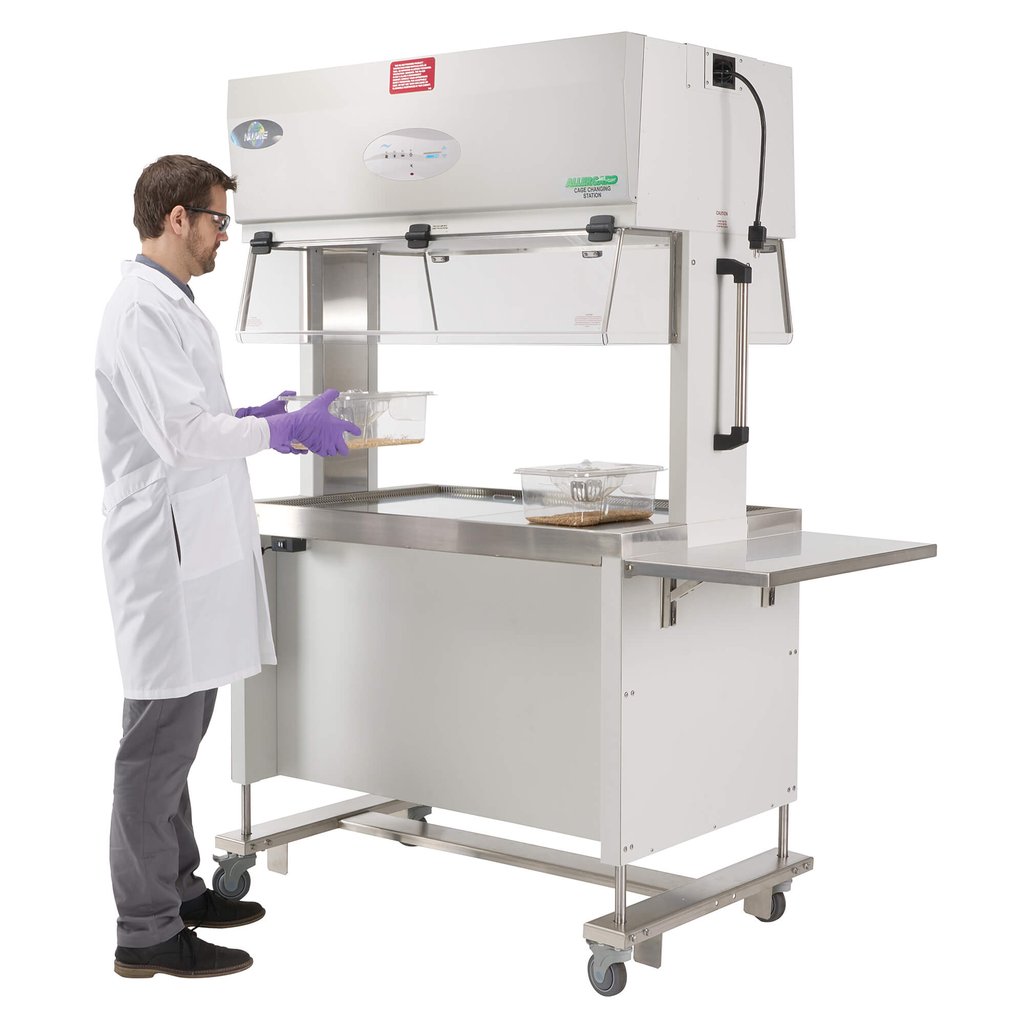
Animal transfer stations use HEPA filtration and a controlled “push-pull” airflow pattern to create a clean work zone inside the enclosure. HEPA-filtered air is pushed down over the work surface to protect the animal from environmental contamination, while a front air barrier pulls allergen-laden particles back through an intake grille – keeping them from escaping into the room and reaching the handler.
What an animal transfer station does NOT provide is biological containment. The ATS is not designed to contain biological aerosols generated by infected animals, does not provide the splash protection required for work with biological agents, and is not certified under NSF/ANSI 49, the standard that governs biosafety cabinet performance. An ATS is not a biosafety cabinet and should never be used as one.
NuAire Animal Transfer Stations available through LabRepCo are among the most widely used ATS models in research vivariums. They are designed specifically for routine cage changes with healthy, uninfected animals in conventional and barrier research facilities.
What Is an Animal Biosafety Cabinet?
An animal biosafety cabinet is a Class II biosafety cabinet specifically designed for work involving laboratory animals. Like standard Class II BSCs used in microbiology and cell culture, animal BSCs provide simultaneous protection for the animal, the handler, and the environment through a combination of HEPA-filtered supply air directed over the work surface and HEPA-filtered exhaust air containing any aerosols or contaminants generated inside the cabinet.
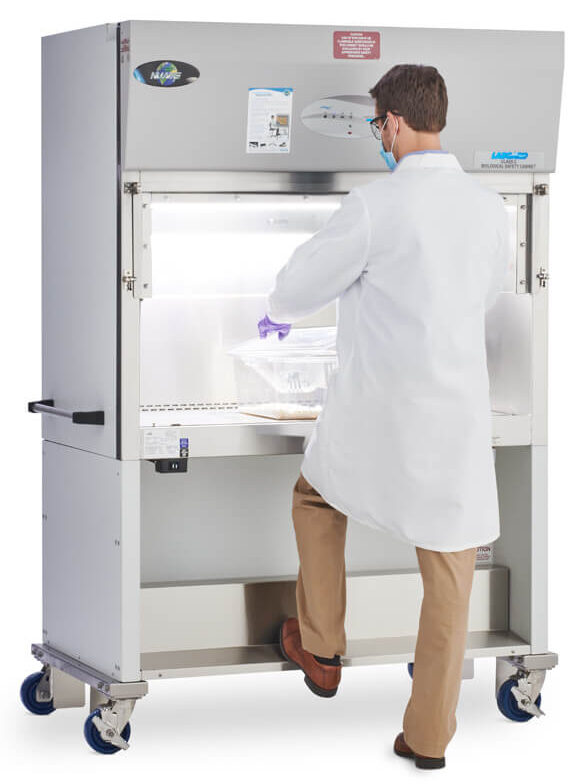
The critical distinction from an ATS is that an animal BSC is NSF/ANSI 49 certified – it has been independently tested and validated to provide the personnel and environmental protection the standard requires. This certification makes it appropriate for work involving animals infected with biological agents at BSL-2 levels, animals receiving viral vectors, and any procedure where biological aerosols or splashes pose a hazard to the handler or the environment.
NuAire LabGard Animal Handling Biosafety Cabinets (NU-677 and NU-640 series) available through LabRepCo are Class II, Type A2 cabinets designed with wider work access openings and vivarium-friendly ergonomics to accommodate cages, racks, and the physical demands of animal handling while maintaining the full containment performance of a certified Class II BSC.
The Biosafety Level Connection
The biosafety level (BSL) of the work being performed is the primary determinant of which type of equipment is required:
BSL-1 animal work with healthy, uninfected animals using established laboratory animal species – an animal transfer station is generally appropriate for routine cage changes and handling. Individual IACUC protocols may specify additional requirements.
BSL-2 animal work involving agents that pose moderate potential hazard to personnel and the environment – a certified animal biosafety cabinet is required for procedures that may generate aerosols or splashes. Routine cage changes in a BSL-2 barrier room may still be performed in an ATS if the animals are not directly infected with a BSL-2 agent.
BSL-3 animal work – specialized primary containment equipment beyond standard animal BSCs is typically required. Contact your Institutional Biosafety Committee (IBC) for guidance specific to your protocols.
When in doubt, always defer to your IACUC protocol, your Institutional Biosafety Committee, and the CDC/NIH Biosafety in Microbiological and Biomedical Laboratories (BMBL) guidelines for the specific agent being used.
Making the Right Choice for Your Vivarium
| Your Procedure | Equipment Needed |
|---|---|
| Routine cage changes with healthy uninfected mice or rats | Animal Transfer Station |
| Allergen control for animal care staff | Animal Transfer Station |
| Work with animals inoculated with BSL-2 agents | Animal Biosafety Cabinet |
| Procedures generating biological aerosols from infected animals | Animal Biosafety Cabinet |
| Administration of viral vectors to research animals | Animal Biosafety Cabinet (confirm with IBC) |
| Necropsy of animals infected with biological agents | Animal Biosafety Cabinet |
| Cage changes with immunocompromised animals (germ-free, nude, SCID) – no infection | Animal Transfer Station (allergen and contamination control) |
LabRepCo’s vivarium equipment specialists have over 40 years of experience helping research institutions specify the right containment equipment for their animal protocols. Browse our vivarium equipment including NuAire animal transfer stations and animal biosafety cabinets, or contact us at 800-521-0754 to discuss your specific IACUC protocol requirements.
Frequently Asked Questions
Can an animal transfer station be used for any cage change procedure?
An ATS is appropriate for routine cage changes with healthy, uninfected animals. It should not be used for procedures involving animals infected with biological agents, administration of viral vectors, or any work where biological aerosols or splashes could pose a hazard to the handler. Always review your IACUC protocol and consult your Institutional Biosafety Committee if there is any uncertainty about whether a procedure requires a certified BSC rather than an ATS.
Is an animal transfer station the same as a laminar flow hood?
No, though they share some characteristics. A laminar flow hood provides unidirectional HEPA-filtered airflow primarily to protect the sample or product from environmental contamination – it provides little or no protection to the operator and is not designed for animal handling. An animal transfer station is specifically engineered for the physical and airflow requirements of cage-to-cage animal transfers, with airflow patterns optimized to control allergen exposure for the handler while protecting the animal. Neither an ATS nor a laminar flow hood should be confused with a biosafety cabinet.
How often do animal transfer station HEPA filters need to be replaced?
HEPA filter replacement frequency depends on the volume of use, the animal species and bedding type (some beddings generate more particulate than others), and the results of periodic airflow velocity verification. Most institutions test ATS airflow performance annually as part of their equipment verification programs. Filter replacement is typically indicated when airflow velocity drops below the manufacturer’s specified minimum, which in high-throughput facilities may occur within 1 to 3 years of operation. Follow the manufacturer’s maintenance schedule and your institutional SOPs for filter change documentation.