
Biological safety cabinets (BSCs) are essential, long-term investments. But the cost on the initial quote is just the beginning. The true financial picture: a BioSafety Cabinet Total Cost of Ownership (TCO) over a decade emerges through operating expenses like energy, annual certification, filters, and unplanned downtime. These factors are often governed by the safety standards established in NSF/ANSI 49, which sets requirements for design, testing, and safety.

Your total long-term cost will be driven by the purchase price, energy usage, annual certification fees, decontamination, and consumables. Planning for these from the start is the best way to reduce surprises and operational downtime. Keep in mind that certification is required annually by NSF/ANSI 49, and often semiannually in pharmacy settings such as USP <797> and USP <800>.
The Six Major Cost Components That Determine TCO
The real financial impact of a BSC is felt long after the initial purchase. These are the components that matter most:
1. Purchase Price and Usable Life (The 15-Year Horizon)
Modern cabinets are engineered for years of daily use. While the physical life can be long, many programs treat 15 years as a practical usable life, or plan for replacement sooner if critical parts become unavailable.
2. Energy Consumption
Energy cost depends on the motor type (e.g., ECM), airflow setpoints, and hours of operation. The cost is a simple calculation:
watts × hours ÷ 1000 = Annual kWh.
This scales dramatically with your utility rate and operational schedule. Independent examples show how low-flow or standby modes can significantly reduce annual energy expenses. NuAire’s ECM-equipped designs and Baker’s ReadySAFE™ low-flow mode illustrate the savings potential.
3. Certification Frequency and Compliance
NSF/ANSI 49 requires a minimum of annual certification. However, compliance standards like USP <797> and USP <800> for pharmacy compounding often require it twice per year. NIH guidance also references annual certification in many research settings. Planning for the correct cadence is non-negotiable.
4. HEPA Filters: Replacing on Condition, Not Schedule
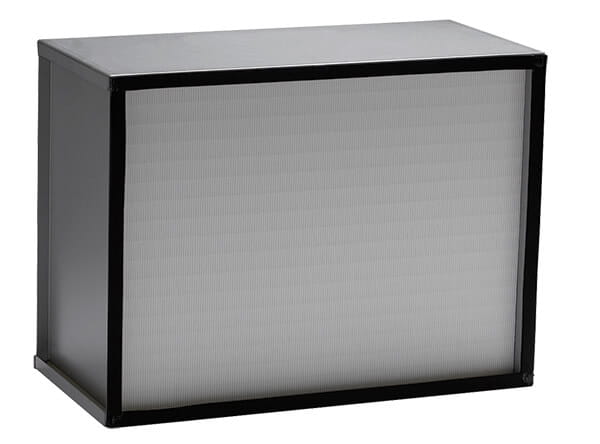
Filters are integrity tested during every certification. Replacement is not based on a fixed calendar date but on pressure rise and performance data (view our blog on HEPA filter lifespan for more information). While many service guides cite three to five years as typical for replacement, actual intervals vary widely based on particle loading and hours of use. Always follow your model and your certifier’s data.
5. Decontamination and Unscheduled Downtime
Before relocation, major service, or filter change, cabinets must be gas decontaminated. Common agents include formaldehyde, chlorine dioxide, or vaporized hydrogen peroxide (VHP). Each method has different safety requirements and impacts your laboratory’s schedule, directly increasing downtime costs.
6. Facilities, Placement, and Exhaust
Placement affects safety and performance. Guidance for side-by-side setups calls for specific clearances to prevent cross-drafts and turbulence. Additionally, planning for canopy exhaust on A2 cabinets may be required if you work with suitable volatile chemicals. Facility planning and HVAC coordination are essential.
A Simple Framework to Model Your 10-Year Total Cost
Use this framework to model total cost, just replace the placeholders with your facility’s data.
- Energy: Annual kWh = cabinet watts ÷ 1000 × hours per year. Multiply by your $/kWh. Be sure to use the lower wattage if your cabinet has low-flow or energy saver modes.
- Certification: Plan for at least one certification per year, plus travel or site fees. Remember that pharmacy areas likely require twice per year.
- Filters: Budget for replacement at data-driven intervals based on pressure and integrity testing. Include both the parts and the decontamination labor.
- Decon: Add the cost of gas decontamination required for moves, filter replacement, or unit retirement. Timelines and costs vary by method and vendor.
- Facilities: Include canopy exhaust hardware and installation labor if needed for your application. Plan for clearances and HVAC coordination to avoid unplanned rework.
Pro Strategy: Model Your Energy Savings
Build a simple worksheet that compares “standard mode all day” versus “low-flow or standby when idle.” Independent data shows the savings from reduced airflow are meaningful and stack significantly over a 10-year period.
Where NuAire Fits in This Cost Picture
NuAire BioSafety Cabinets are engineered to specifically focus on factors that directly map to these cost drivers: energy efficiency, stable control, ergonomics, and lifecycle support.
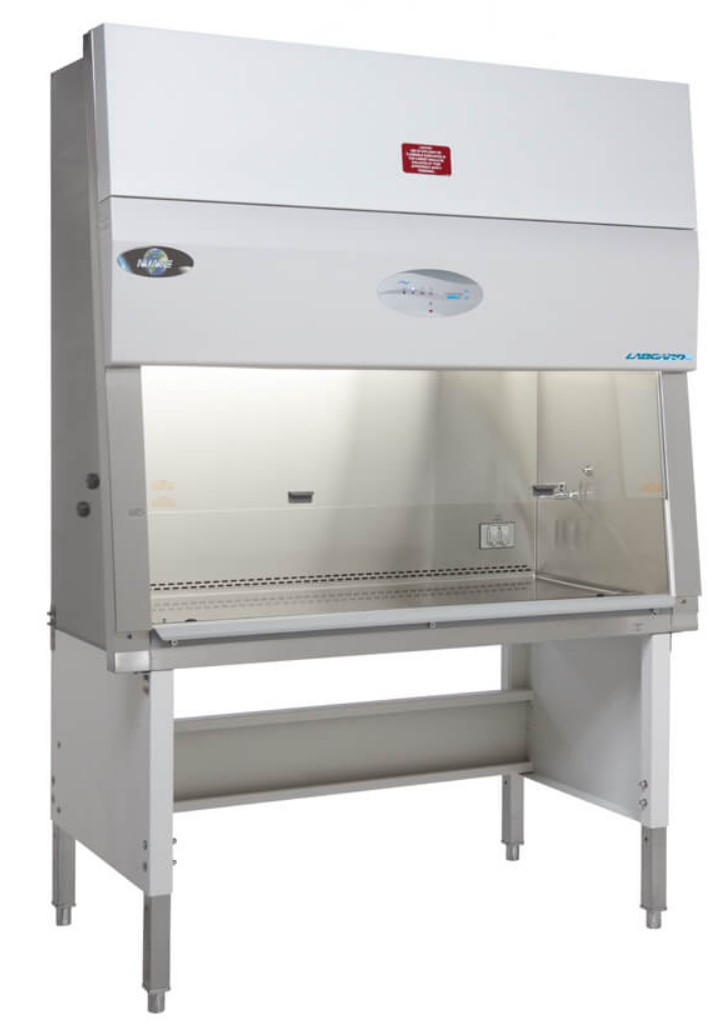
- Energy and Airflow Stability: Models like the LabGard NU-540 use energy-saving ECM motors. ECM technology economizes energy while actively maintaining airflow against filter loading. This can stabilize performance and potentially delay filter changes.
- Standards and Certification: NuAire provides resources addressing NSF/ANSI 49 and EN 12469, offering guidance on field certification and maintenance. This helps your team plan for predictable compliance.
- Noise and Ergonomics: Modern designs use EC/DC motors and tuned airflow paths to reduce noise and vibration, improving user comfort during long sessions.
- Lifecycle Planning: NuAire suggests a practical 15-year usable life, aiding long-range capital budgeting.
Why TCO Clarity Matters to Lab Managers and Procurement
A predictable operating cost is your best defense against unexpected budget hits. Good planning, especially around energy-efficient airflow control and proper placement, not only reduces downtime and rescheduling headaches but also delivers the fastest, most meaningful savings over the entire 10-year window.
For more information on NuAire BioSafety Cabinets and how they can help lower your labs total cost of ownership, view our BioSafety Cabinet pages and reach out to speak with your local sales rep today.
Frequently Asked Questions (FAQ)
Most manufacturers and laboratory programs use a practical usable life of 15 years for modern BSCs. While the cabinet may function longer, technological changes, regulatory updates, and the increasing difficulty of finding replacement parts often make replacement necessary after this period.
Certification, typically required annually by NSF/ANSI 49, is critical because it ensures the BSC’s airflow and HEPA filters are performing correctly. In certain high-compliance settings, such as pharmacy compounding under USP <797> and USP <800>, certification is required semiannually (every six months)
Turning a BSC completely off can save money, but it’s generally not recommended unless you plan to decontaminate it before its next use. A better approach is to use a low-flow or standby mode to maintain containment and aseptic conditions at a significantly reduced energy cost, avoiding the time and expense of full decontamination.
HEPA filters should be replaced based on condition and performance data, not on a fixed calendar schedule. If the filter is accumulating too much particulate matter (leading to excessive pressure drop) or if it fails the integrity test, it must be replaced. A typical range is 3 to 5 years, but this varies widely based on usage.
DC (electronically commutated) motors are significantly more energy efficient than older AC motors. They use less electricity and often include a low-flow standby mode for even greater savings. They can also automatically compensate for filter loading, maintaining stable airflow and potentially extending the useful life of the HEPA filters.
References
- NSF International. Biosafety Cabinetry Certification: NSF/ANSI 49. Standard scope and certification overview. Available at: https://www.nsf.org/lab-testing/biosafety-cabinetry/biosafety-cabinet-certification
- National Institutes of Health (NIH), Office of Research Services (ORS). Biological Safety Cabinet Services. Guidance on annual certification and procurement. Available at: https://ors.od.nih.gov/sr/dohs/safety/laboratory/BioSafety/Pages/ih_biocabinets.aspx
- United States Pharmacopeia (USP). USP <797> Pharmaceutical Compounding – Sterile Preparations and USP <800> Hazardous Drugs – Handling in Healthcare Settings. Standards requiring semiannual BSC certification in pharmacy compounding. Available at: https://www.usp.org
- NuAire, Inc. LabGard® ES NU-540 Class II, Type A2 Biosafety Cabinet. Technical specifications on ECM motor design and airflow performance. Available at: https://www.nuaire.com/products/biosafety-cabinets/class-ii-type-a2/labgard-nu-540-class-ii-type-a2-biosafety-cabinet
- NuAire, Inc. When to Replace a Biosafety Cabinet. Lifecycle guidance and 15-year replacement recommendations. Available at: https://www.nuaire.com/resources/when-to-replace-a-biosafety-cabinet
- NuAire, Inc. Proper Procedures and Techniques for Biosafety Cabinet Placement. Recommendations for cabinet clearance and laboratory airflow considerations. Available at: https://www.nuaire.com/resources/biosafety-cabinet-proper-procedures-techniques-video
- University of California, Riverside (UCR) Environmental Health & Safety. Biosafety Manual. Guidance on safe equipment decontamination and removal procedures. Available at: https://ehs.ucr.edu/sites/default/files/2019-06/Biosafety_Manual.pdf
- Texas A&M University–Corpus Christi Institutional Biosafety Committee (IBC). Biosafety Training and General Laboratory Practices. Procedures for decontamination and biosafety operations. Available at: https://www.tamucc.edu/research/compliance/ibc/training.php
- Qualia Bio. NSF/ANSI 49: Biosafety Cabinet Standard Explained. Overview of integrity testing, airflow verification, and condition-based maintenance. Available at: https://qualia-bio.com/blog/nsf-ansi-49-biosafety-cabinet-standard-explained/