
There are several types of laboratory balances and scales, each designed for specific levels of accuracy, capacity, and precision. Understanding the different types of laboratory balances and the differences between high-capacity scales, precision (toploading) balances, analytical balances, and microbalances helps you choose the right one for your lab’s weighing needs.
Whether you are weighing bulk materials or measuring microgram-level samples, selecting the correct balance ensures accurate, repeatable results that keep your lab efficient and compliant.
High-Capacity Scales (Industrial Lab Scales)
When your work involves large or heavy samples, a high-capacity scale provides the durability and range needed for reliable bulk weighing. These instruments are built to handle high loads while maintaining dependable accuracy.
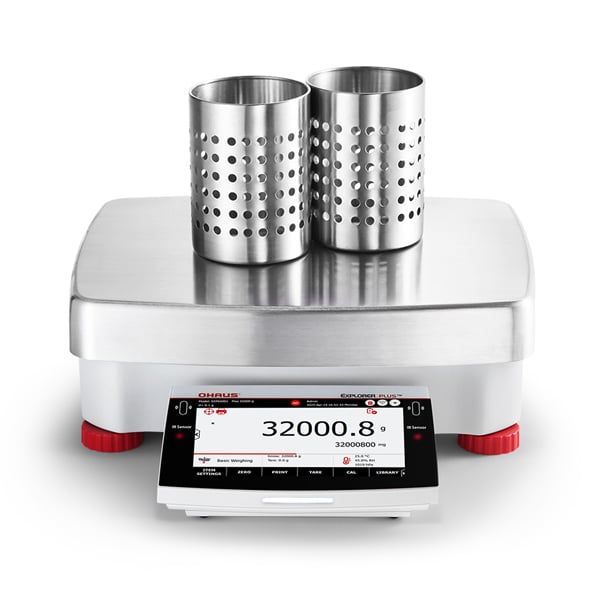
Key Features:
- Capacity: 10 to 100+ kilograms
- Readability: 0.1 to 1 gram
- Applications: Industrial labs, vivariums, material testing, and production environments
- Design: Large, rugged platforms resistant to vibration and temperature fluctuations
Ideal For:
Weighing heavy containers, raw materials, or animal cages when high precision is not required.
Precision Balances (Toploading Laboratory Scales)
Precision balances, also called toploading scales, offer an excellent balance between capacity and accuracy. They are fast, versatile, and ideal for daily laboratory weighing tasks.
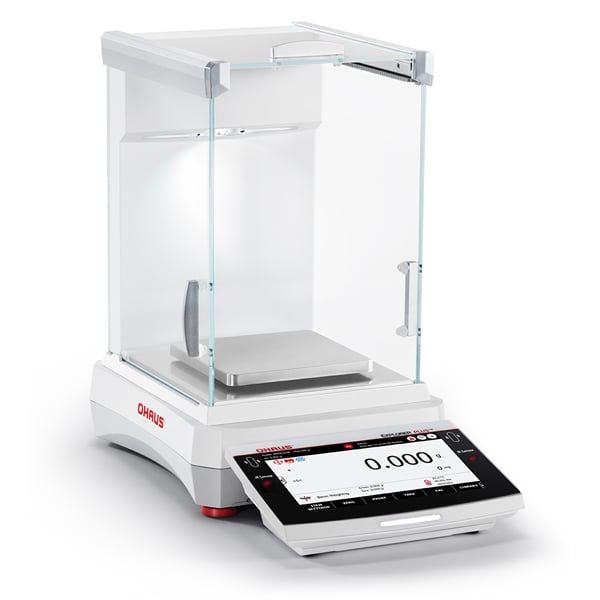
Key Features:
- Capacity: 200 grams to 10 kilograms
- Readability: 0.001 to 0.1 gram
- Applications: Routine weighing, sample preparation, and quality control
- Design: Open platforms for convenience, some with partial draft shields
Ideal For:
Routine sample weighing, buffer preparation, and everyday lab work requiring consistent precision.
Analytical Balances (Milligram Accuracy)
For measurements requiring high sensitivity, analytical balances deliver the precision needed for research and formulation. They measure to the nearest tenth of a milligram and are enclosed to prevent airflow interference.
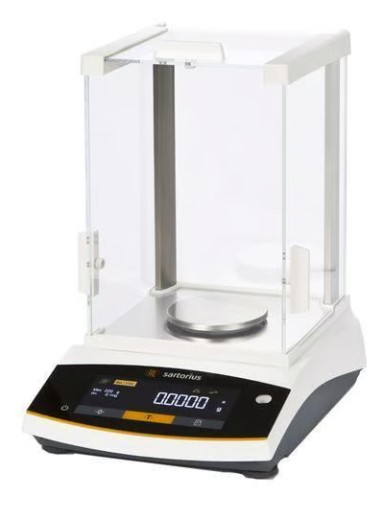
Key Features:
- Capacity: Up to 300 grams
- Readability: 0.0001 gram (0.1 mg)
- Applications: Analytical chemistry, pharmaceutical formulation, calibration
- Design: Fully enclosed draft shield for stable, repeatable measurements
Ideal For:
Weighing reagents, preparing analytical standards, or performing precise quality control analyses.
Microbalances (Ultra-High Precision Lab Balances)
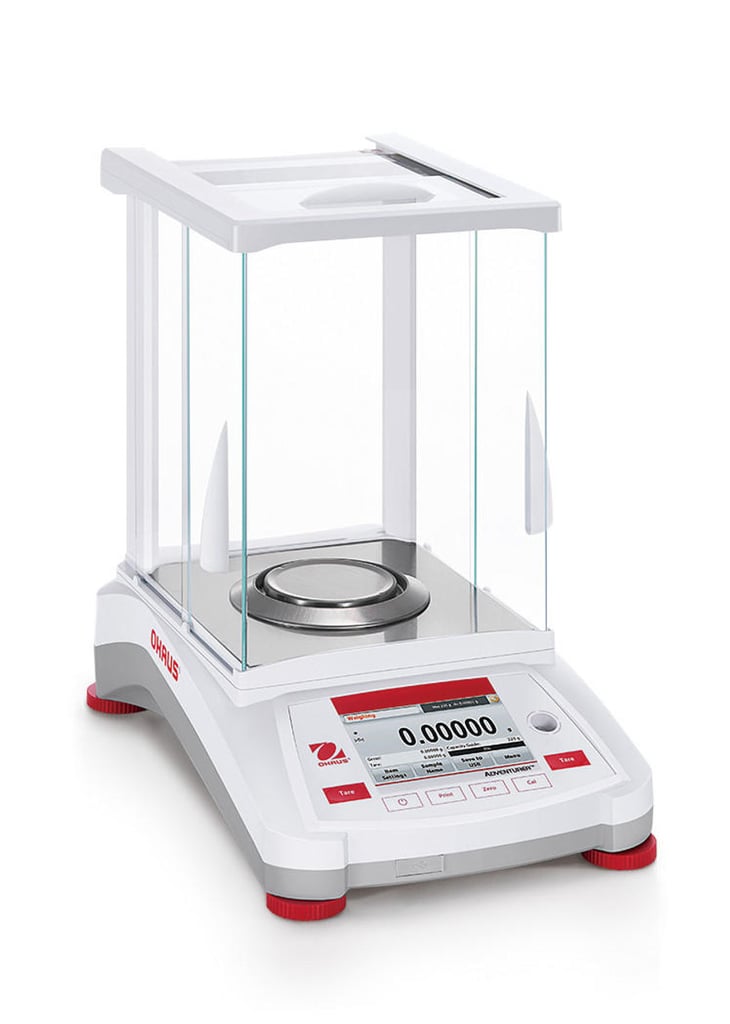
When precision goes beyond the milligram range, microbalances provide measurements down to one microgram. These instruments are critical for advanced research and applications requiring extreme accuracy.
Key Features:
- Capacity: 1 to 60 grams
- Readability: 0.000001 gram (1 µg) or better
- Applications: Nanomaterial research, pharmaceutical testing, filter weighing
- Design: Vibration-isolated enclosures with temperature and humidity control
Ideal For:
Measuring ultra-fine samples, particulates, or micro-mass materials with exceptional sensitivity.
Portable Balances (Compact and Field-Ready Weighing)
Not all weighing happens in a controlled lab environment. Portable balances are designed for flexibility, allowing users to perform accurate measurements in the lab, in production areas, or out in the field.
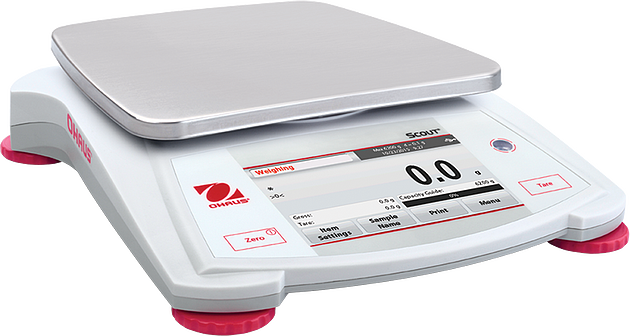
According to industry resources, portable balances are typically battery-powered and easily transportable, making them ideal for applications where mobility is essential.
Key Features:
- Capacity: Typically 50 grams to 20+ kilograms
- Readability: 0.001 g to 1 g (depending on model)
- Applications: Field sampling, incoming inspection, production floors, education labs
- Design: Lightweight, compact, and often battery-operated for portability
Portable balances are engineered for durability and ease of use. Unlike analytical balances, they prioritize mobility and speed over ultra-high precision, making them well suited for environments where conditions are less controlled.
Ideal For:
Weighing samples outside the lab, performing quick measurements in multiple locations, or working in environments where space and power access are limited.
Types of Laboratory Balances Comparison at a Glance
| Type | Capacity Range | Readability | Accuracy Level | Typical Use |
|---|---|---|---|---|
| High-Capacity Scale | 10 to 100+ kg | 0.1 to 1 g | Low | Bulk materials, animal weighing |
| Precision Balance | 200 g to 10 kg | 0.001 to 0.1 g | Medium | Routine weighing, sample prep |
| Analytical Balance | ≤300 g | 0.0001 g (0.1 mg) | High | Research, formulations, calibration |
| Microbalance | ≤60 g | 0.000001 g (1 µg) | Ultra-High | Nanomaterials, pharmaceutical testing |
| Portable Balance | 50 g to 20+ kg | 0.001 to 0.1g | low to medium | Routine weighing sample preparation |
How to Choose the Right Balance
When selecting a laboratory balance, consider three main factors:
- Capacity – How much weight do you need to measure?
- Readability – What is the smallest increment required for accuracy?
- Environment – Temperature, vibration, and airflow can all affect precision.
For most labs, combining multiple balance types provides flexibility. A precision balance can manage general tasks, while an analytical or microbalance handles critical measurements.
Simplify Your Lab Balance Search
At LabRepCo, we offer a full range of laboratory balances and scales from trusted brands including Ohaus, Sartorius, Accuris, and Torbal. Whether you need a rugged high-capacity platform or a microgram-accurate analytical balance, our specialists can help you find the right fit for your lab.
Browse Full Selection of Laboratory Balances & Scales ›
Frequently Asked Questions About the Different Types of Laboratory Balances
The four main types are high-capacity scales, precision (toploading) balances, analytical balances, and microbalances. Each differs in capacity, readability, and accuracy.
Analytical balances offer higher readability (0.0001 g) and include a draft shield for stability. Precision balances have greater capacity but lower readability (0.001–0.1 g).
A microbalance measures extremely small masses down to one microgram for applications like pharmaceutical testing, nanotechnology, and filter analysis.
Consider the capacity you need, the resolution required, and your environmental conditions. Many labs use multiple balance types to cover both general and specialized tasks.
Analytical balances are extremely sensitive to air currents and vibrations. A draft shield protects the weighing chamber from airflow, helping maintain stable, accurate readings down to 0.0001 grams.
Balances should be calibrated regularly, typically every 3 to 6 months, depending on usage and lab requirements. Calibration ensures continued accuracy, especially for research, quality control, and compliance with GLP or GMP standards.