
Ultra-low temperature freezers are essential for protecting biological samples. They are also among the most energy-intensive equipment found in many laboratories with conventional ULT freezers consuming approximately 20 kWh of electricity per day, according to ENERGY STAR.
For labs working to control operating costs and improve sustainability, one question deserves consideration: Does every ULT freezer need to operate at -80°C?
In appropriate applications, raising the setpoint from -80°C to -70°C may reduce energy consumption by approximately 20% to 40%. Actual savings depend on the freezer’s age, design, condition, loading and usage. The decision must also account for sample requirements, storage duration, protocols and operational risk.
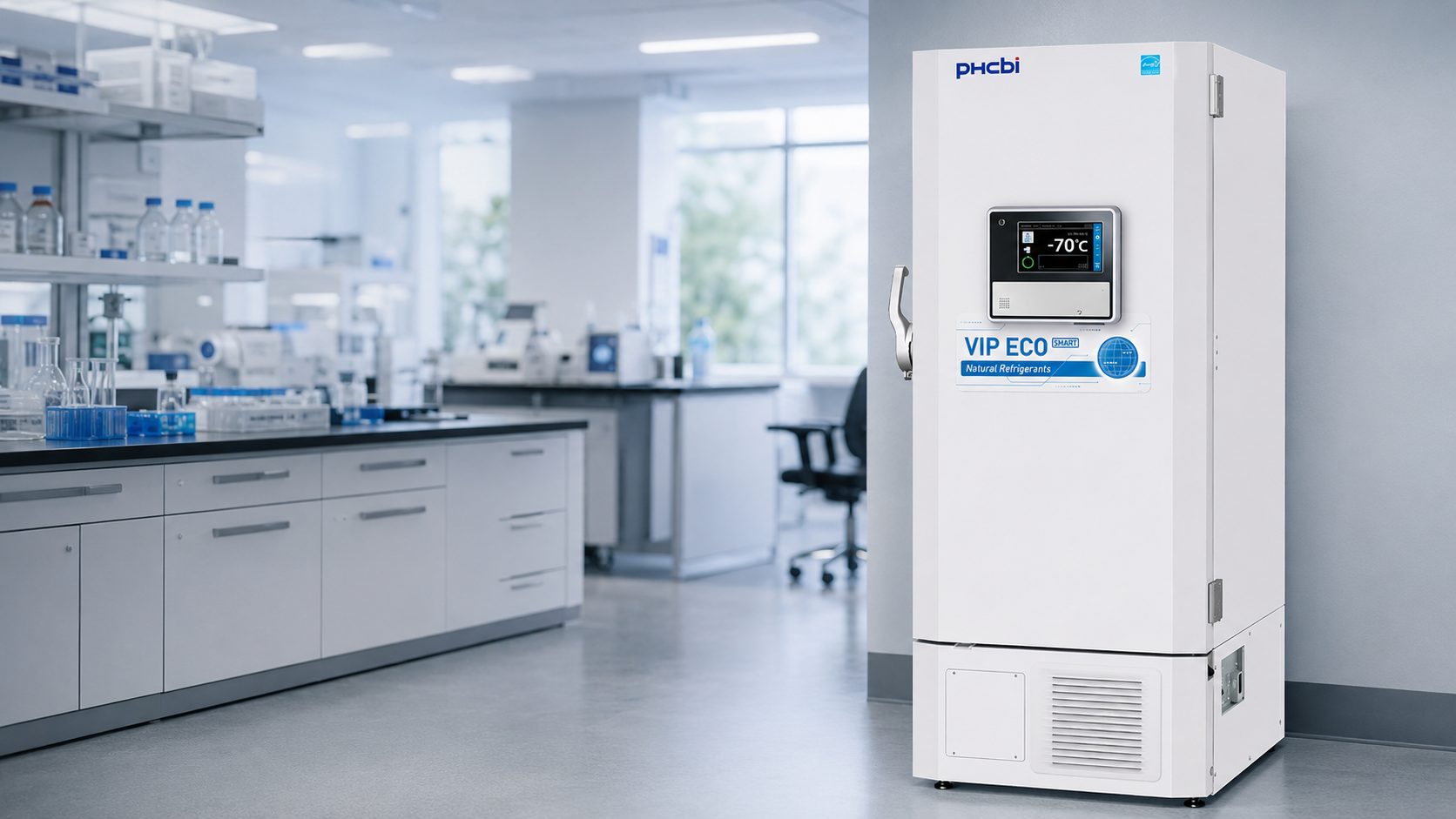
Why ULT Freezer Setpoints Matter
ULT freezers maintain extremely low temperatures for the long-term preservation of sensitive biological materials. These temperatures help limit chemical and enzymatic degradation, supporting the stability of properly prepared samples.
Maintaining -80°C generally requires more refrigeration work than maintaining -70°C under comparable conditions. Raising the setpoint can reduce compressor runtime or power demand, depending on the freezer’s design and controls.
The U.S. Department of Energy reports that changing a suitable ULT freezer from -80°C to -70°C can reduce energy consumption by up to 40%. Testing and guidance from the University of Washington and University of Colorado Boulder document savings ranging from approximately 20% to more than 30%.
For facilities operating several ULT freezers, the combined savings can become significant. Lower freezer energy use may also reduce the heat released into the room resulting in savings that can extend beyond the freezer to the building’s HVAC system according to a comprehensive ULT freezer energy-efficiency study.
Is -70°C Appropriate for Every Sample?
Although a -70°C setting might sound appealing, it is not recommending for all types of sample storage. Labs should not change freezer setpoints without reviewing the requirements of the materials being stored.
Storage requirements cannot be determined by sample category alone. Materials within the same category may require different conditions based on several factors. These include preparation methods, stabilizers, cryoprotectants, intended analyses and storage duration.
Some published protocols, including guidance from the World Health Organization and the Centers for Disease Control and Prevention, permit specific specimens or microorganisms to be stored at or below -70°C. However, these examples do not establish -70°C as appropriate for every nucleic acid, protein, cell, tissue or microorganism. Each collection should be evaluated against its own documented requirements.
Before changing a freezer setpoint, review:
- Sample type and preparation method
- Intended downstream analyses
- Expected storage duration
- Required storage temperature
- Applicable study protocols and SOPs
- Manufacturer recommendations
- Regulatory and institutional requirements
- Available stability data
- Freezer performance history
- Sample value and replacement risk
The National Cancer Institute recommends considering specimen type, storage duration and the biomolecules of interest. Labs should also consider whether viable cells must be preserved. Storage conditions and deviations should be documented consistently.
How a -70°C Setpoint Can Reduce Energy Use
A ULT freezer operating at -70°C maintains a smaller temperature difference between its interior and the surrounding room. This typically reduces the amount of refrigeration work required.
Depending on the freezer, potential benefits may include:
- Lower daily energy consumption
- Reduced compressor runtime or power demand
- Less heat released into the laboratory
- Lower operating and HVAC costs
- Reduced environmental impact
- Better alignment between storage conditions and actual sample needs
- Potentially less wear on refrigeration components
Reduced refrigeration demand may contribute to longer equipment life. However, this is not guaranteed. Service life also depends on the freezer’s design, condition, ambient environment, ventilation, maintenance and usage.
Energy savings also vary considerably between units. Tests summarized by the University of Colorado Boulder found approximately 20% to 22% savings among several newer freezers. Two individual older units showed savings of approximately 25% and 33%.
Consider the Reduced Temperature Buffer
Energy savings are not the only factor to consider. A freezer operating at -70°C starts 10°C closer to common alarm or sample-transfer thresholds.
This difference may reduce the available response time during a power outage or refrigeration failure. Freezer loading, insulation, ambient temperature and door openings can also affect how quickly the interior warms.
Before raising the setpoint, labs should review:
- High-temperature alarm settings
- Remote monitoring and notification procedures
- Emergency power availability
- Backup freezer capacity
- Sample-transfer procedures
- Expected staff response times
- Freezer loading and sample thermal mass
A documented emergency response plan is especially important for valuable or irreplaceable collections.
Modern ULT Freezers Can Improve Efficiency
Setpoint strategy is only one part of an efficient cold storage program. Freezer design, installation, maintenance and daily use also influence energy consumption.
Many current ULT freezer models use technologies designed to improve efficiency and temperature performance. Depending on the model, these may include:
- Variable-capacity compressors
- Lower-global-warming-potential hydrocarbon refrigerants
- High-performance insulation
- Improved door sealing
- Advanced temperature controls
- Remote monitoring and alarm capabilities
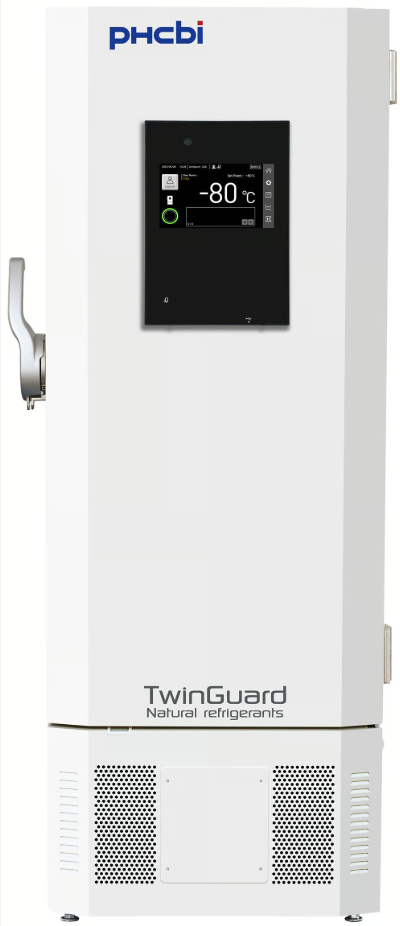
ENERGY STAR identifies efficient compressors, advanced controls, improved air circulation and innovative refrigerants as technologies that can reduce laboratory freezer energy consumption. However, performance and energy use still vary by model and capacity.
Older, poorly maintained or deteriorating freezers may consume more energy than efficient current models. Frost buildup, dirty condenser filters and inadequate ventilation can further reduce performance. Worn seals and declining refrigeration components may also increase energy use.
If a freezer struggles to recover after door openings or produces excessive heat, it should be evaluated. Frequent alarms and unstable temperatures may also indicate the need for service or replacement. For more information on if your freezer is at risk, read our article “Signs Your Ultra Low Freezer is About to Fail“.
Best Practices Before Adjusting ULT Freezer Temperature
Begin by inventorying everything stored in the freezer. Identify the documented storage requirements for each collection.
Consider the specimen type, preparation method, intended use and expected storage duration. Materials with validated -80°C requirements should remain under those conditions. Do not assume an entire sample category is suitable for -70°C based on general guidance.
Document the proposed adjustment through your laboratory’s risk-assessment or change-control process. Review applicable SOPs, study protocols, manufacturer instructions and regulatory requirements. Obtain the necessary scientific and quality approvals for regulated or irreplaceable materials.
After making an approved adjustment:
- Verify performance with calibrated temperature-monitoring equipment
- Review alarm thresholds and notification settings
- Confirm stable temperatures under normal operating conditions
- Record the setpoint change and approval
- Communicate the new storage requirements to freezer users
- Maintain adequate backup storage and emergency procedures
- Continue reviewing temperature records for unexpected changes
Temperature mapping may also help identify warmer and colder areas within the cabinet. NCI guidance recommends validating storage equipment, monitoring freezer conditions and recording deviations from established procedures.
When Should a ULT Freezer Remain at -80°C?
A -70°C setpoint is not appropriate when validated requirements call for -80°C or colder storage.
A freezer should generally remain at its current setpoint when it contains:
- Samples with validated requirements at -80°C or colder
- Materials governed by established study protocols
- Samples covered by institutional SOPs specifying -80°C
- Regulated materials with approved storage conditions
- Collections without adequate stability data at -70°C
- Samples requiring preservation of viable cells or specialized analytes
- Materials for which the added 10°C failure-response buffer is important
Some viable cells, tissues and other sensitive materials may require temperatures below -80°C. Vapor-phase liquid nitrogen storage may be appropriate for certain applications. The correct temperature should always follow the validated storage method.
The goal is not to raise every ULT freezer to -70°C. It is to match each freezer’s operating temperature to its documented storage requirements and risk profile.
A Smarter Approach to ULT Freezer Efficiency
Running an appropriate ULT freezer at -70°C can substantially reduce energy consumption. It may also lower operating costs, decrease room heat output and reduce refrigeration demand.
However, the decision must begin with the samples. Labs should review storage requirements, applicable protocols and emergency procedures before changing a setpoint. The adjustment should be evaluated and documented like any other change affecting sample integrity.
LabRepCo offers a range of ultra-low temperature freezers for research, clinical and biobanking applications. Our team can help laboratories compare temperature ranges, energy consumption, capacity, footprint, monitoring features and recovery performance. This consultative approach helps labs identify equipment that supports both sample protection and operational efficiency.
References
- U.S. Department of Energy: Purchasing Energy-Efficient Laboratory-Grade Refrigerators and Freezers
- ENERGY STAR: Low-Temperature Freezer Technology and Energy Efficiency
- National Cancer Institute: Best Practices for Biospecimen Resources
- University of Colorado Boulder: Freezer Energy Efforts
- University of Washington: Ultra-Low Temperature Freezers