
Whether you’re setting up a new laboratory, replacing aging equipment, or simply trying to make sense of the different cabinet classes and subtypes, understanding biosafety cabinet (BSC) classes is essential. Choose the wrong class and you risk exposing your team to hazardous aerosols, contaminating your samples, or failing a regulatory inspection. Choose the right one and your lab is better positioned to operate safely, efficiently, and in compliance with applicable requirements.
This guide breaks down every BSC class and subtype, including how each works, what it protects, and when to use it.
What Is a Biosafety Cabinet?
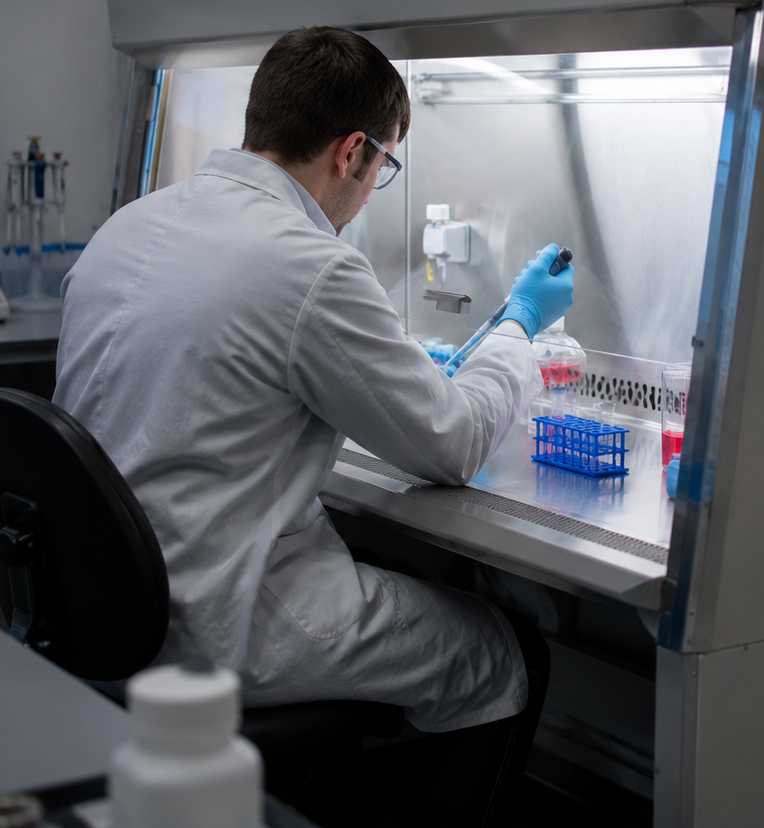
A biosafety cabinet is a ventilated containment enclosure that uses controlled airflow and HEPA filtration to prevent contaminants from escaping the work area. Unlike a standard lab bench or even a chemical fume hood, a BSC is specifically engineered to protect personnel, research materials, and the surrounding environment from exposure to infectious or hazardous biological agents.
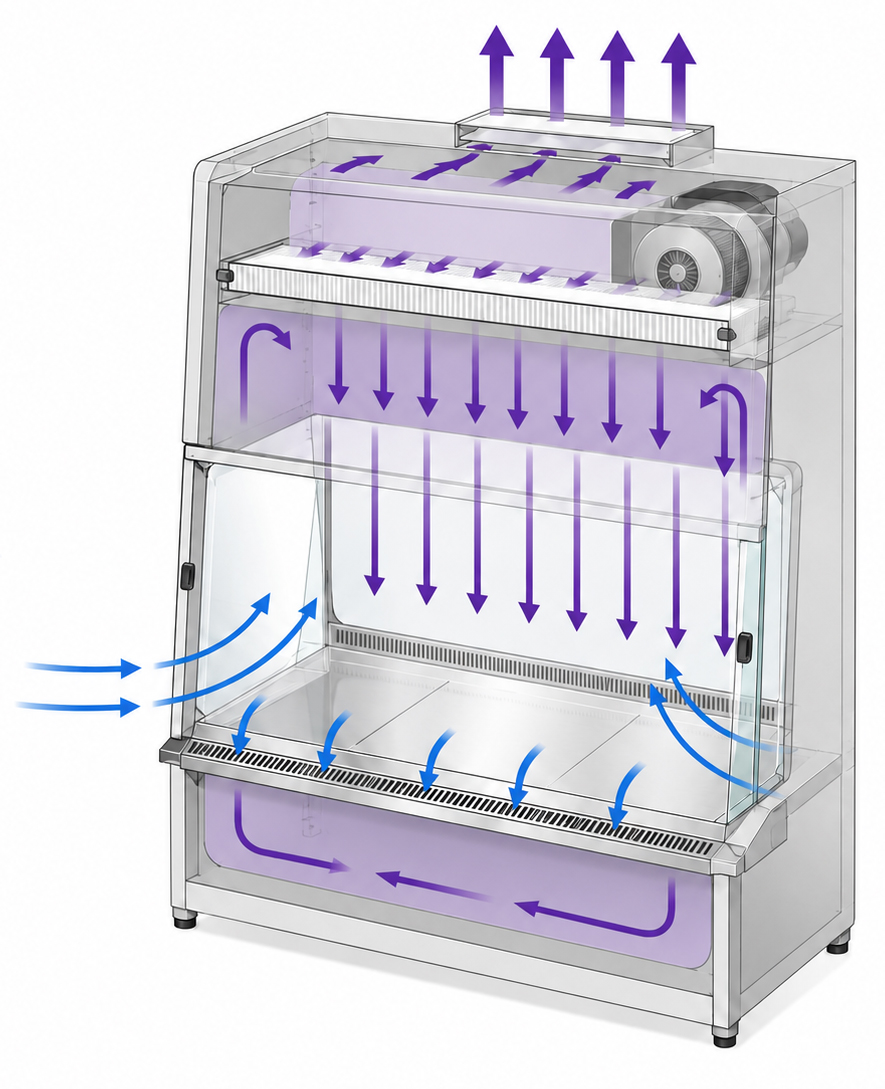
The key mechanism is airflow management: air is drawn in, filtered, and either exhausted externally or recirculated, all in a pattern designed to create a protective barrier between the operator, the sample, and the room.
The Three Protection Priorities
Before diving into classes, it helps to understand what BSCs are actually protecting against. There are three distinct types of protection:
- Personnel protection: Shields the operator from airborne aerosols, droplets, and splashes generated during lab procedures.
- Product/sample protection: Prevents external contaminants (including room air and particulates) from reaching the material being worked on, preserving sterility.
- Environmental protection: Prevents any release of hazardous biological agents into the broader lab environment or the outside air.
Not all biosafety cabinets provide all three. As outlined by the U.S. Department of Health & Human Services, Class I cabinets offer personnel and environmental protection only, while Class II and Class III cabinets provide all three layers simultaneously.
This distinction is the single most important thing to understand when choosing a cabinet.
Class I Biosafety Cabinets
How It Works
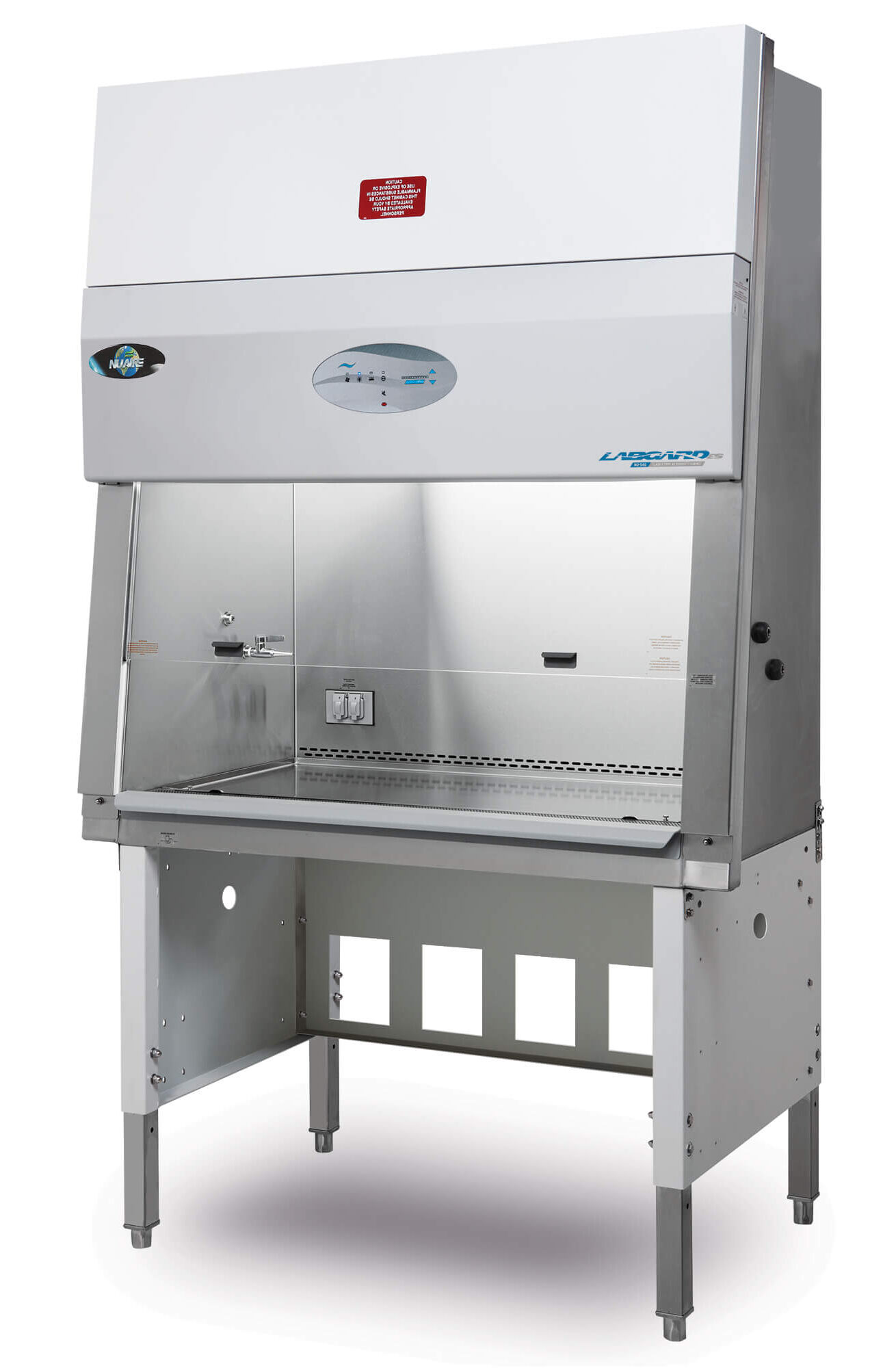
Class I Biosafety Cabinets are the most basic and oldest BSC design. Room air is drawn inward through the open front (the same opening through which the operator works), creating a continuous inflow that pulls aerosols and particles away from the operator’s breathing zone. That air then travels through a HEPA filter before being either exhausted outside the building (ducted) or recirculated back into the lab (unducted).
The HEPA filtration ensures that air moving out of the cabinet is filtered before discharge, helping protect the environment. But critically, the air flowing over the work surface is unfiltered room air, meaning anything sitting on the bench may be exposed to particulates present in the room.
What It Protects
- ✅ Personnel
- ✅ Environment
- ❌ Product/Sample
Best Applications
Class I cabinets are well-suited for:
- General microbiological procedures with low-to-moderate risk agents (BSL-1 and BSL-2)
- Work where sample sterility is not a concern
- Procedures involving radioactive materials or low-level chemical hazards (when ducted)
- Labs with budget constraints that don’t require product protection
Limitations
Because unfiltered room air passes directly over the work surface, Class I cabinets should never be used when maintaining the sterility of cultures, cell lines, or other sensitive biological material is a requirement. If your work demands both operator safety and a clean sample environment, you need Class II.
Class II Biosafety Cabinets: The Lab Workhorse
Class II cabinets are by far the most widely used type in biological research, clinical, teaching, and pharmaceutical settings. The reason is straightforward: they protect the operator, the sample, and the environment simultaneously, making them the right choice for the vast majority of modern lab work.
How It Works
Class II cabinets use a layered airflow strategy:
- Inward airflow at the open front creates an air curtain that prevents aerosols from escaping into the lab.
- HEPA-filtered laminar downflow directs clean air over the work surface, protecting samples from contamination.
- HEPA-filtered exhaust ensures that any air leaving the cabinet is clean before it returns to the room or exits the building.
This three-part system is what allows Class II to achieve all three protection goals at once.
Biosafety Levels Covered
Class II biosafety cabinets are commonly used for work with agents at Biosafety Levels 1, 2, and 3 when installed, certified, and operated as part of an appropriately designed laboratory containment program. They are the standard choice for cell culture, microbiology, immunology, and most pharmaceutical compounding applications.
Breaking Down the Class II Subtypes
Class II cabinets are further divided into Types A1, A2, B1, B2, and the newer C1, each defined by how much air is recirculated versus exhausted, and how the exhaust is handled. Choosing the right subtype matters, especially if your work involves chemicals or volatile compounds.
Type A1
The original Class II design. Type A1 recirculates a majority of cabinet air back into the work zone through HEPA filters and exhausts the remainder into the room. It’s suitable for basic microbiological and tissue culture work but is not recommended for use with any toxic chemicals or radionuclides, since exhaust returns to the lab environment. A1 cabinets also maintain a lower minimum inflow velocity (75 ft/min) than A2 and B1 cabinets (100 ft/min), which is part of why A2 has largely superseded A1 in modern lab specifications.
Type A2 (Most Common)
Type A2 is the most commonly found Class II cabinet in laboratories today. It recirculates approximately 70% of air through internal HEPA filters and exhausts the remaining 30%: either into the room or, if connected to a canopy exhaust, outside the building. Type A2 cabinets may be suitable for trace amounts of volatile chemicals and radionuclides, but only when properly exhausted and approved by your safety officer. This is part of what makes A2 versatile for general biosafety work at BSL-1 through BSL-3, provided chemical use stays within those limits.
Type B1
Type B1 cabinets exhaust the majority of air to the outside via a hard-duct connection, recirculating only a small portion. This makes them capable of handling small quantities of hazardous chemicals, though they are less flexible than B2 cabinets for heavy chemical work. B1 is a reasonable middle ground when occasional chemical use is needed alongside biological work.
Type B2 (Total Exhaust)
Type B2 exhausts 100% of cabinet air to the outside; none is recirculated. This complete exhaust design ensures that no chemical vapors are returned to the workspace, which is why B2 cabinets are commonly specified for work involving toxic, volatile, or radioactive chemicals alongside biological agents. Their suitability depends on the specific hazards involved and the facility’s risk assessment. They are frequently found in toxicology labs, pharmacology research, and any setting where chemical and biological hazards co-exist. The tradeoff is higher installation and operating costs due to the dedicated hard-duct requirement.
Type C1 (The New Generation)
Type C1 is a relatively new biosafety cabinet design that combines recirculating and externally exhausted operating modes within a single platform. In its recirculating configuration, it functions similarly to a Type A cabinet for standard microbiological work. When connected to an appropriate exhaust system and operated within designated work zones, it can also support certain procedures involving hazardous chemicals. This flexibility, combined with improved energy efficiency, makes C1 an attractive option for labs that need to support a broader range of applications without purchasing multiple cabinet types.
Because Type C1 is newer than the long-established A2, B1, and B2 designs, labs should confirm suitability with their biosafety officer, facilities team, and certifier before specifying one. The appropriateness of a C1 cabinet for chemical use depends on the manufacturer’s design, the designated work zone, and the certified operating configuration. In addition, your facility’s exhaust infrastructure must support the intended mode of operation.
Class III Biosafety Cabinets: Maximum Containment
When the pathogens being handled are so dangerous that no amount of airflow management is considered sufficient protection on its own, Class III cabinets are the answer.
How It Works
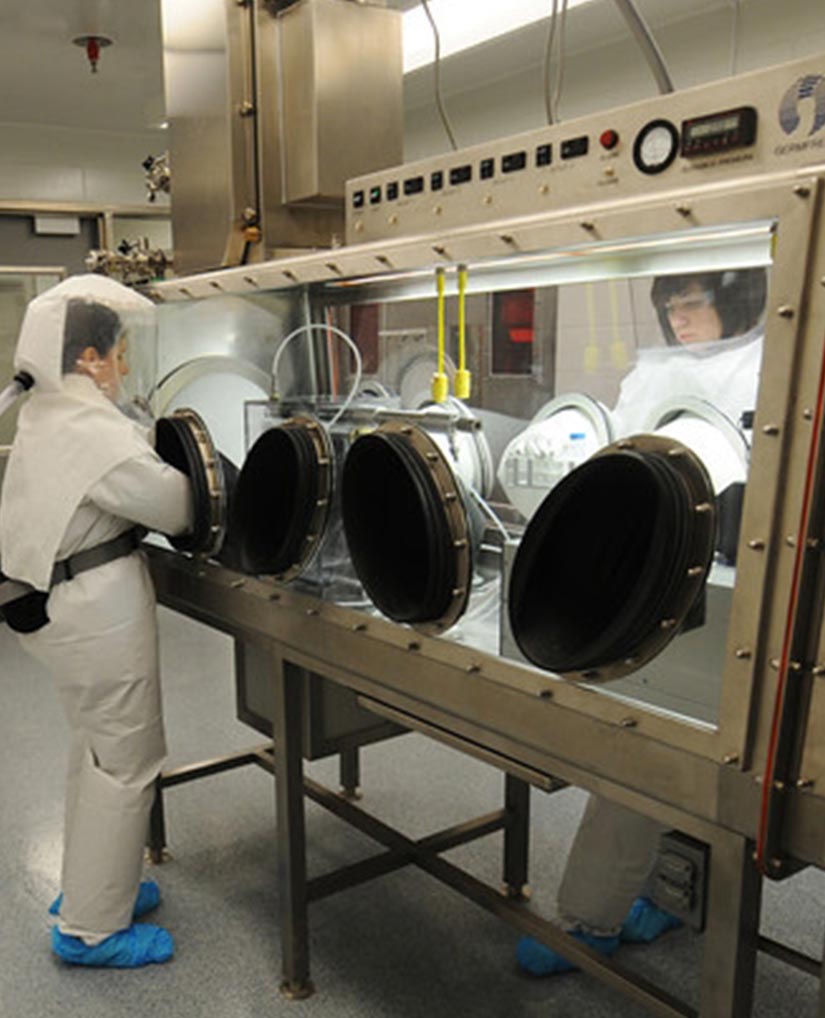
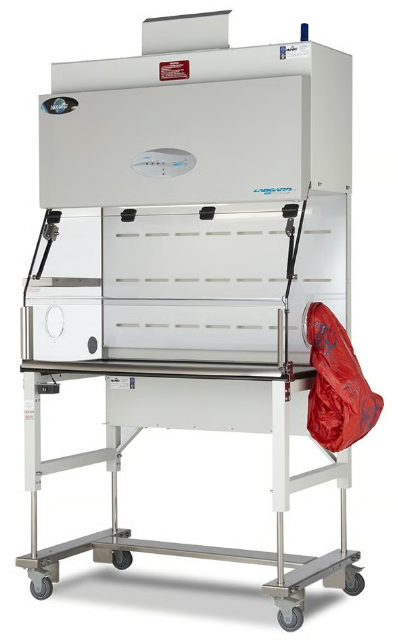
Class III cabinets are completely enclosed, gas-tight enclosures maintained under negative pressure. The operator never directly contacts the work environment; instead, all manipulation is performed through heavy-duty rubber gloves sealed to ports on the cabinet face. All materials entering or leaving the cabinet pass through a decontaminating airlock. Every cubic foot of air entering the cabinet is HEPA-filtered, and all exhaust passes through two HEPA filters in series before being discharged outside.
In some configurations, exhaust is incinerated rather than filtered, providing an additional layer of biological inactivation.
What It Protects
- ✅ Personnel (maximum protection)
- ✅ Product/Sample
- ✅ Environment (maximum protection)
Class III is the only cabinet class that creates a complete physical barrier between the user and the hazardous agent without relying on airflow alone.
Best Applications
Class III biosafety cabinets are used in maximum containment laboratories that handle the most dangerous known pathogens, including Ebola, Marburg, and other hemorrhagic fever viruses. It’s worth noting that Class III is not the only path to BSL-4 containment: according to CDC/NIH biosafety guidance, BSL-4 facilities can be designed either as “cabinet laboratories,” where all work is conducted inside Class III BSCs, or as “suit laboratories,” where personnel wear positive-pressure protective suits with a dedicated air supply instead. Which approach a facility uses depends on its design, protocols, and the specific agents involved.
Because of their complexity and cost, Class III cabinets are often custom-outfitted with supplemental equipment such as microscopes, centrifuges, and incubators built directly into the sealed enclosure.
Side-by-Side Comparison
| Class I Basic containment |
Class II A2
Most common
★ Popular
|
Class II B2 Total exhaust | Class III Max containment | |
|---|---|---|---|---|
| Protection | ||||
| 👤 Personnel | ||||
| 🧪 Product/sample | ||||
| 🌿 Environment | ||||
| Suitability | ||||
| 🦠 Biosafety level | BSL 1–2 | BSL 1–3 | BSL 1–3 | BSL 3–4 |
| 💧 Chemical/volatile use | Limited | Trace only | Yes | Yes (configured) |
| 🚪 Open front | ||||
| Airflow & exhaust | ||||
| 💨 Air recirculation | Yes / No (ducted or not) |
~70% recirculated ~30% exhausted |
None (100% exhaust) |
None (double HEPA) |
| 🔬 HEPA filtration | Exhaust only | Supply + exhaust | Supply + exhaust | Dual exhaust |
| Practical considerations | ||||
| 🧤 Operator access | Open front arms | Open front arms | Open front arms | Sealed glove ports |
| 💰 Relative cost | Low | Moderate | High | Very high |
| 🏥 Typical settings | General micro labs | Research, clinical, pharma, teaching |
Toxicology, biomedical |
BSL-4 max containment labs |
How to Choose the Right Biosafety Cabinet
With so many options, the selection process can feel overwhelming. Here are the key decision factors to work through in order:
1. What biosafety level are your agents? BSL-1 or BSL-2 work is covered by Class I or Class II. BSL-3 work requires Class II (properly configured) or Class III. BSL-4 work requires maximum containment, achieved either through Class III cabinets or a positive-pressure suit laboratory design; this is a facility-level decision made well beyond cabinet selection alone.
2. Do your procedures involve chemical or volatile compounds? If your procedures involve significant quantities of volatile chemicals or radionuclides, a recirculating A1 or A2 cabinet is generally not appropriate. You’ll need a B1, B2, or Class III depending on the volume and toxicity involved.
3. Does sample sterility matter? If you’re working with cell cultures, media, or any material that must stay uncontaminated, Class I is off the table. You need Class II or III.
4. What are your exhaust infrastructure constraints? B1, B2, and Class III cabinets require dedicated hard-duct exhaust connections. If your lab isn’t plumbed for external exhaust, a Type A2 (with canopy exhaust) or Type C1 may be a more practical choice.
5. What’s your budget and energy footprint? Class III cabinets carry significant purchase and installation costs. Type B2 also runs high due to exhaust system requirements. If flexibility and energy efficiency are priorities, Type C1 is worth a serious look.
When in doubt, consult your institutional biosafety officer (IBO) before purchasing. The wrong choice is expensive and potentially dangerous.
Certification, Compliance, and Ongoing Maintenance
Purchasing the right cabinet is only step one. To remain effective and compliant with applicable safety requirements, biosafety cabinets must be regularly tested and certified.
NSF/ANSI 49: The Governing Standard
NSF/ANSI 49 is the primary U.S. standard governing biosafety cabinet design, construction, and performance. It defines the testing protocols manufacturers must pass to receive certification, and it governs field certification requirements for cabinets in active use. The most current version, NSF/ANSI 49-2024, includes updated language on pressure decay testing, noise level requirements, and preventive maintenance procedures.
When Must a BSC Be Certified?
According to NSF/ANSI 49 and the CDC/NIH BMBL 6th Edition, a biosafety cabinet must be field certified:
- At installation: before any laboratory work is performed in the cabinet
- After any repair that may have affected cabinet performance, including HEPA filter replacement
- After relocation: any time the cabinet is moved, even within the same building
- Annually: at a minimum, once per year regardless of usage
In North America, NSF-accredited field certifiers are generally considered the industry standard and are required or strongly preferred by many institutions and agencies. Certification typically involves inflow and downflow velocity testing, HEPA filter leak testing, smoke pattern visualization, and electrical safety checks.
Routine Maintenance
NSF/ANSI 49 mandates regular maintenance between certifications as well, including routine inspection of all cabinet components, cleaning and decontamination of work surfaces and interior walls, and monitoring of airflow and filter performance indicators.
Common Mistakes to Avoid
Even experienced lab professionals make these errors:
- Using a Class I cabinet when product sterility is needed. Room air moving over the work surface can contaminate your samples.
- Choosing a Type A2 for volatile chemical work. Recirculated air will concentrate vapors inside the cabinet. Use B2 or B1 instead.
- Skipping or delaying annual certification. An uncertified BSC offers no guarantee of protection: HEPA filters degrade, airflow patterns shift, and seals fail over time.
- Confusing a BSC with a chemical fume hood. A fume hood protects the operator from chemical vapors but does not filter air for biological containment. These are not interchangeable.
- Overcrowding the work surface. Blocking the front or rear grilles disrupts the airflow patterns the cabinet depends on. Keep the work surface clear and unobstructed.
- Working too close to the front opening. Rapid arm movements in and out of the sash opening can break the inward airflow barrier. Move slowly and deliberately.
Conclusion
Biosafety cabinets are not one-size-fits-all. Class I BSC’s offers basic operator and environmental protection for low-risk, non-sterile work. Class II (with its A1, A2, B1, B2, and C1 variants) covers the widest range of everyday lab applications, providing complete three-way protection for most biosafety levels. Class III Cabinets delivers absolute maximum containment for the most dangerous pathogens on earth.
The right cabinet is the one that matches your biosafety level, your chemical usage, your sample requirements, and your facility infrastructure. When in doubt, start with those four criteria, consult your institutional biosafety officer, and verify that any cabinet you select is currently certified to NSF/ANSI 49.
Safe labs don’t happen by accident. They’re built on the right equipment, properly maintained and certified.
Need Help Choosing the Right Biosafety Cabinet?
If you are comparing biosafety cabinet options, the safest choice is not always the most obvious one. Selecting between Class II A2, B2, C1, and Class III often comes down to details that are easy to get wrong on paper: your exact biosafety level, chemical use, exhaust infrastructure, and certification timeline. LabRepCo’s biosafety cabinet specialists can help you compare options and find the right fit for your application before you buy.
Frequently Asked Questions
They are often confused but serve different purposes. A laminar flow hood (also called a clean bench) blows HEPA-filtered air toward the operator to protect the sample from contamination, but it offers zero protection to the person working at it. A biosafety cabinet draws air inward and away from the operator, protecting both the user and the environment. Never use a laminar flow hood when working with infectious or hazardous biological agents.
Class II Type A2 is by far the most widely used. It provides all three levels of protection (personnel, product, and environment), handles BSL-1 through BSL-3 agents, and works for the vast majority of cell culture, microbiology, and pharmaceutical applications. It also does not require a hard-duct exhaust connection in most configurations, making it easier and cheaper to install than B1 or B2 variants.
It depends on the cabinet type. Recirculating cabinets like Class II A1 and A2 should not be used with significant quantities of volatile or toxic chemicals, since vapors can build up and be recirculated back into the workspace. For chemical work alongside biological agents, you need a Type B1, Type B2 (total exhaust), or Class III cabinet. Always consult your safety officer before mixing chemical and biological work in any BSC.
At a minimum, annually. But certification is also required at installation, after any repair that could affect cabinet performance (such as a HEPA filter replacement), and any time the cabinet is relocated, even if it only moves to a different room in the same building. Skipping certification is a compliance risk and means you have no verified assurance the cabinet is actually working as intended.
An uncertified cabinet may still appear to function normally, but there is no guarantee that airflow velocities are correct, HEPA filters are intact, or containment is being maintained. In a regulatory or inspection context, operating an uncertified BSC can result in citations or work stoppages. More importantly, it creates real safety risk: degraded filters and shifted airflow patterns are not visible to the naked eye.
BSL refers to the risk classification of the biological agent being handled and the containment measures required for the lab as a whole, including facility design, protective equipment, and procedures. BSC class refers specifically to the type of cabinet used at the bench level. They are related but not the same thing. A BSL-2 lab, for example, typically uses a Class II BSC, but the BSC class alone does not define the biosafety level of the lab.
No. Class II cabinets, with their open front, do not meet BSL-4 containment requirements. That said, Class III is not the only path to BSL-4 containment: BSL-4 work requires maximum containment, which may be achieved either through Class III biosafety cabinets in a “cabinet laboratory” design, or through specialized positive-pressure suit laboratories, where personnel work in sealed protective suits with a dedicated air supply instead of using a cabinet at all. Which approach is used depends on the facility’s design and protocols. Class III cabinets are specifically used when the facility and protocol call for a fully sealed, glove-port containment system.
If your work involves any volatile chemicals, radionuclides, or odorous agents, a ducted connection to an external exhaust system is strongly recommended, or required, depending on the cabinet type. Non-ducted (recirculating) cabinets like the Type A2 are suitable for purely biological work with no chemical hazards. When in doubt, consult your institutional biosafety officer and your facilities team to assess your exhaust infrastructure before purchasing.
Yes, in specific situations. If your work involves no need for sample sterility, Class I is a cost-effective option that still protects the operator and the lab environment. It is also sometimes used for procedures involving radioactive or chemical materials where the lower cost and simpler airflow design are advantages. However, for most modern laboratory work (especially anything involving cell culture or sensitive biological material), Class II is the better choice.
HEPA stands for High Efficiency Particulate Air. HEPA filters capture 99.97% of particles at 0.3 microns or larger, which covers the size range of most bacteria, fungal spores, and aerosol droplets containing viruses. In a BSC, HEPA filters are used on the supply air (to deliver clean air to the work surface), the exhaust air (to clean air before it leaves the cabinet), or both, depending on the cabinet class and type.
References
- CDC & NIH: Biosafety in Microbiological and Biomedical Laboratories (BMBL), 6th Editionhttps://www.cdc.gov/labs/bmbl/index.html
- U.S. Department of Health & Human Services (ASPR): Biosafety Cabinets: Protection in Biological Labshttps://aspr.hhs.gov/S3/Pages/Biosafety-Cabinets.aspx
- NSF International: Biosafety Cabinetry Certification: NSF/ANSI 49https://www.nsf.org/lab-testing/biosafety-cabinetry/biosafety-cabinet-certification
- ANSI Blog: NSF/ANSI 49-2024: Biosafety Cabinets Design and Performance https://blog.ansi.org/ansi/nsf-ansi-49-2024-biosafety-cabinets-bscs/
- NuAire: Biosafety Cabinet Types: Class I, II & III BSC Guidehttps://www.nuaire.com/resources/biosafety-cabinet-types-article
- NuAire: Biosafety Cabinet Classes: Overview and Historyhttps://www.nuaire.com/en/resources/biosafety-cabinet-classes-article
- NuAire: Class III Biosafety Cabinet: How It Workshttps://www.nuaire.com/resources/class-iii-biosafety-cabinet-how-it-works-article
- NuAire: Biosafety Cabinet Field Certification: What Lab Professionals Need to Knowhttps://nuaire.com/resources/need-for-field-certification-of-biosafety-cabinets
- ABSA International: Biosafety Cabinet Basics & Member Resourceshttps://absa.org/biosafety/
- Eagleson Institute: Biosafety Cabinet Training Courses https://www.eagleson.org/product-category/biosafety-cabinet-classes